Best Sustainable Safari Options for Families: A Professional Guide
Engaging with the natural world as a family carries a profound responsibility. When travel is an active engagement with fragile ecosystems, the potential for positive impact is significant. However, the safari industry is often obscured by marketing rhetoric. The term ‘sustainable’ is frequently applied to operators with vastly different commitments to conservation and socio-economic integrity.
Families benefit uniquely from wildlife travel. Beyond the immediate experience, these journeys instill a lifelong appreciation for biodiversity and cultural diversity in younger generations. Yet, identifying operators who truly integrate conservation into their core business model remains a challenge. Navigating this space requires more than a casual glance at a website. It demands a critical examination of operational transparency, conservation funding, and the nuances of human-wildlife dynamics.
Understanding “best sustainable safari options for families.”
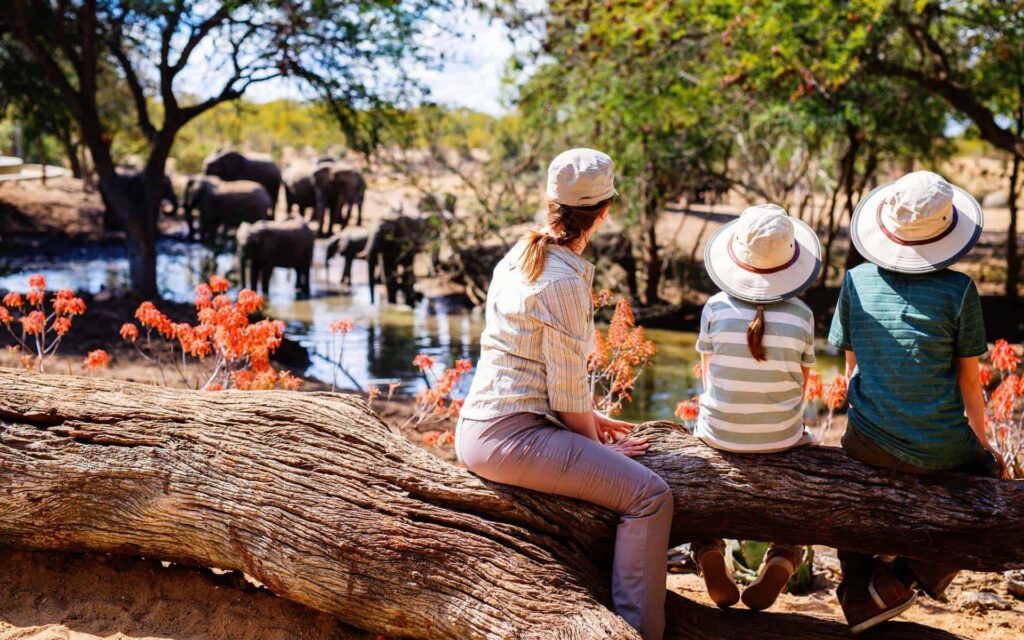
The search for the best sustainable safari options for families is frequently derailed by the industry’s reliance on superficial metrics. A primary misunderstanding is the conflation of “eco-friendly” infrastructure, such as the elimination of single-use plastics or the installation of solar arrays, with systemic sustainability. While these operational efficiencies are necessary, they are not sufficient to define a truly restorative safari operation. True sustainability is embedded in the political, economic, and ecological integration of an operation within its host landscape.
The danger of oversimplification lies in the prioritization of “sight-guarantees” and high-density animal interaction, which often come at the expense of behavioral welfare or the ecological stability of the habitat. High-integrity planning recognizes that family-friendly engagement must prioritize observation over physical interaction, as the latter almost inevitably implies a level of animal habituation or containment that contradicts conservation goals. A genuinely sustainable family safari ensures that the presence of children and parents does not disrupt natural rhythms or local community autonomy.
Deep Contextual Background
Historically, the wildlife tourism industry was built upon a “fortress conservation” paradigm. This model sought to preserve biodiversity by sequestering land from human habitation, which often led to the alienation of local indigenous populations and the creation of insular, poorly managed ecosystems. As the limitations of this top-down approach became clear, the sector began a slow, necessary transition toward community-based natural resource management.
This systemic evolution has reached a point where the most successful conservation initiatives are now inextricably linked to the economic viability of tourism. The challenge today is to maintain this economic engine while correcting the historical imbalances of power and access. Families traveling to these regions are no longer just passive observers; they are active participants in a fragile social-ecological system. Understanding this historical context is essential for recognizing why the most effective operators are those who maintain transparent, long-term partnerships with the people who have lived alongside these wildlife populations for generations.
Conceptual Frameworks and Mental Models
To assess the integrity of safari operators with the sophistication required for long-term ecological outcomes, one should employ structured mental models:
-
The Triple Bottom Line Framework: This evaluates an operation based on three equal metrics: environmental conservation, socio-economic community benefit, and organizational transparency. If one pillar is neglected, the entire system is unstable.
-
The Social License to Operate: This model measures whether an operator is genuinely welcomed and supported by the local community. A lodge that operates in isolation from its surrounding villages—or worse, at their expense—lacks the foundation necessary for long-term sustainability.
-
The Disturbance-Threshold Model: This acknowledges that every human presence has an impact. High-integrity planning relies on the principle of minimal disturbance, setting clear boundaries for how close to approach animals, how many vehicles can be present, and how long sightings can last.
-
The Educational Agency Model: Rather than teaching children that animals are curiosities to be viewed, this framework focuses on fostering agency, helping families understand the complex role wildlife plays in local cultures, economies, and planetary health.
Key Categories and Operational Variations
Safari operations vary by their core philosophy and the specific ecological or social pressures of their region.
| Category | Primary Focus | Trade-off |
| Community-Owned Conservancy | Long-term land lease & revenue sharing | Lower luxury amenities; more “rugged.” |
| Conservation-Science Focused Lodge | Field research participation & funding | Highly educational; less “leisure” time |
| Regenerative Estate | Active soil/habitat restoration | Requires a large footprint; expensive |
| Eco-Boutique Lodge | Minimal operational footprint | Often smaller scale, high demand |
| Mobile Eco-Safari | Minimal long-term environmental trace | High logistical complexity |
Deciding among these depends on the family’s specific educational and experiential goals.
Real-World Scenarios and Decision Logic
Consider the apex predator protection scenario. A lodge may boast about its “exclusive” big cat sightings. An ethical family evaluation requires asking: how does the lodge contribute to the mitigation of human-wildlife conflict? If the surrounding communities lose livestock to these predators, is there a formal, transparent compensation scheme? A failure mode here is a lodge that profits from predator sightings while its neighbors bear the cost of their presence.
Another scenario involves water-stressed habitat management. In arid landscapes, water extraction is a critical point of tension. Does the lodge recycle greywater for garden use? The second-order effect of failing to evaluate this is the unintentional depletion of local aquifers, which directly impacts the community’s primary source of clean water.
Planning, Cost, and Resource Dynamics
Sustainable family travel requires an honest assessment of costs and the values these costs represent.
-
Direct Economic Contributions: Higher-quality operators often include a “conservation levy,” which is transparently managed. This fee should be separate from park entry costs.
-
Operational Overhead: Genuine sustainability, fair wages for staff, rigorous anti-poaching, and renewable energy inevitably command a higher market price.
-
Opportunity Cost: Choosing the most sustainable option may mean foregoing the “guaranteed” sight of a specific animal in favor of a wider, more ethical, and educational experience that prioritizes the health of the population over the satisfaction of the lens.
| Cost Dynamics | Description |
| Transparency Premium | Higher costs to support audits and local salary benchmarks. |
| Conservation Contribution | Often, 5-15% of the total trip cost goes toward direct habitat/species protection. |
| Resource Variability | Prices are rarely fixed; seasonal adjustments and logistics can create significant variance. |
Tools, Strategies, and Support Systems
-
Independent Impact Audits: Look for operators that share third-party, publicly verifiable reports on their community and conservation contributions.
-
Staff Tenure and Training: High turnover in local staff is a strong indicator of an unsustainable, exploitative social environment.
-
Formal Partnership Disclosures: Seek lodges that can name their specific community partners or the village councils they work with.
-
Wildlife Behavior Monitoring: Reputable lodges will have clear policies regarding how they handle sightings, particularly when animals are showing signs of stress.
-
Supply Chain Traceability: Are ingredients sourced locally? This is both a sustainability metric and a community economic benefit.
Risk Landscape and Failure Modes
The primary systemic threat is Greenwashing, where the veneer of sustainability (reusable bottles, minimal lighting) obscures a lack of deep investment in community and conservation. A secondary, compounding risk is Habituation, where family-focused tours inadvertently push vehicles closer or stay longer to ensure “the kids see the action,” leading to animals losing their natural fear of humans, which often precedes poaching incidents.
Furthermore, Institutional Failure occurs when an operator is owned by a remote entity with no accountability to local stakeholders. The most resilient family travel plans are those that ensure the economic benefits remain in the hands of those who live on the land.
Governance, Maintenance, and Long-Term Adaptation
Sustainability is an ongoing commitment, not a static accreditation. The best operators treat it as a management discipline.
-
Periodic Review Cycles: High-performance lodges conduct annual or even quarterly reviews of their ecological impact.
-
Adjustment Triggers: If a wildlife population shows signs of distress, high-integrity operators have protocols to restrict access, regardless of the financial impact.
-
Layered Governance: Look for operations where community leaders have a seat at the decision-making table, ensuring that the lodge’s development does not override the community’s needs.
Measurement, Tracking, and Evaluation
Evaluation for families should look for both quantitative and qualitative signals of success.
-
Leading Indicators: The presence of a dedicated conservation officer, clear and public community employment statistics, and transparent water/waste management data.
-
Lagging Indicators: The sustained success of local species monitoring programs and the measurable growth of local businesses that supply the lodge.
-
Examples of Evidence: Annual social impact reports, audited environmental performance documentation, and testimonials from local community partners rather than just other travelers.
Common Misconceptions and Oversimplifications
-
Myth: “All-inclusive” safari resorts are the most sustainable.
Correction: They are often the most extractive; decentralization often leads to higher community benefit. -
Myth: Any lodge with “Eco” in the title is ethical.
Correction: It is an unregulated term; always dig into the governance structure. -
Myth: Family safaris require “easy” animals.
Correction: Nature is dynamic; prioritizing understanding natural behavior over “seeing” leads to a deeper, more ethical experience for children. -
Myth: Offsetting flights is enough to make a safari “carbon neutral.” Correction: It is a peripheral aid; the focus must remain on the absolute reduction of energy intensity at the source.
-
Myth: Animals in protected areas are safe.
Correction: Many are only safe if the tourism revenue provides an effective, locally-supported anti-poaching shield. -
Myth: Touching animals in “sanctuaries” is okay if it’s for charity.
Correction: In almost every case, such interaction is for commercial gain and negatively affects the animal’s welfare.
Ethical, Practical, and Contextual Considerations
The act of taking a family to experience wildlife is an exercise in managing power differentials. The goal is to move the family from the position of “observer of a commodity” to “steward of a habitat. Contextually, it is essential to acknowledge the colonial history of many wildlife regions and to choose operators who actively address and rectify these power imbalances through local empowerment.
Conclusion
The pursuit of the best sustainable safari options for families requires a shift in perspective, moving from a consumer-led model of tourism to a partnership-driven model of conservation. There is no automated shortcut to this level of due diligence, but the process of evaluation is itself a valuable educational experience for parents and children alike. By prioritizing systemic governance, transparent community engagement, and a commitment to ecological integrity over the superficial lures of traditional tourism, families can participate in the preservation of the world’s remaining wild spaces.