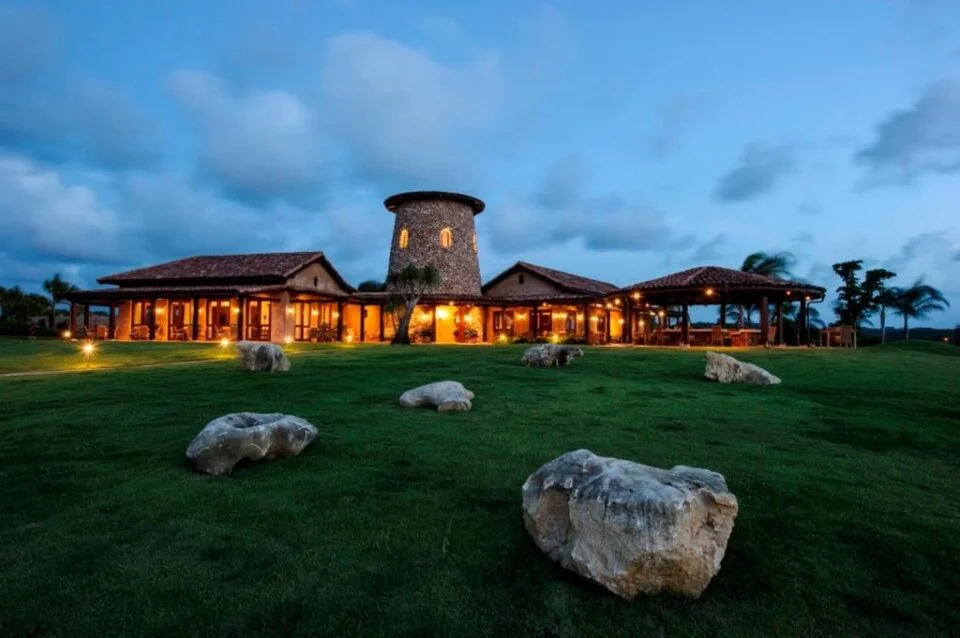
Best Eco Resorts in the US: A Guide to Sustainable Travel
The contemporary travel landscape is marked by a fundamental tension: the desire for immersive, high-quality hospitality versus the growing awareness of the ecological and social toll that such experiences often exact on fragile destinations. As the mainstream hospitality sector grapples with the fallout of mass-market consumption waste proliferation, carbon-intensive infrastructure, and economic leakage, the quest for genuine sustainability has become a primary driver of high-end travel. Yet, the proliferation of “green” labels has created an informational thicket, making it increasingly difficult for the discerning traveler to distinguish between superficial marketing gestures and substantive, structural commitments to conservation.
At the core of this challenge lies the definition of a resort. Historically, the resort model has functioned as an extractive enclave, often disconnected from the surrounding landscape and the local communities that steward it. Transitioning away from this legacy requires a radical shift in operational philosophy. Truly sustainable hospitality must move beyond eliminating plastic straws or promoting linen-reuse programs; it demands an integrated, system-level approach that considers the full life cycle of energy, the sovereignty of local labor, and the restorative potential of the resort’s footprint within its immediate ecosystem.
Understanding “best eco resorts in the US.”

These markers frequently measure only the easiest, most visible metrics, such as energy-efficient lighting or water reduction, while failing to account for deeper, more systemic issues like economic leakage or habitat fragmentation. The risk of oversimplification is significant. When a resort is labeled as “eco,” the expectation is often an idyllic, wilderness-adjacent property. However, urban sustainability is equally critical; a hotel in a major metropolitan center that utilizes retrofitted historical infrastructure and powers itself entirely through renewable municipal grids may be more “eco-conscious” than a luxury lodge in a pristine forest that relies on fossil-fuel-powered generators and private charter transit. To identify the best eco resorts in the US, one must strip away the aesthetic presentation and interrogate the underlying operational data. Is the property’s presence restorative to the local biodiversity, or is it merely managing its decline?
Deep Contextual Background
The evolution of ecotourism in the United States reflects broader shifts in American environmentalism. In the mid-20th century, nature-based travel was largely confined to national parks, emphasizing a “look but don’t touch” preservationist ethic. As the concept of ecotourism migrated from international developing contexts to the domestic U.S. market in the late 1980s and 90s, it struggled to define its place within a culture dominated by high-impact, mass-market tourism.
Early adopters often relied on a “wilderness retreat” model, small-scale, off-grid lodges that prioritized solitude over creature comforts. Over time, as consumer demand for sustainability grew, the market split into two distinct tiers: the “boutique experiential” sector, which prioritizes architectural integration with nature, and the “corporate-scale green” sector, which attempts to retrofit existing hotel infrastructure with sustainable technology. The current landscape is a mosaic of these efforts, with the best eco resorts in the US increasingly moving toward a “regenerative” model, one that seeks to actively improve the ecosystems they occupy rather than merely minimizing their negative impact.
Conceptual Frameworks and Mental Models
To evaluate properties with professional rigor, utilize the following analytical frameworks:
-
The Regenerative-Impact Ratio: This assesses whether the resort’s presence results in a net gain for local biodiversity. Does the property actively restore degraded land or participate in rewilding initiatives?
-
The Economic-Leakage Metric: A measure of how much revenue remains within the local community. A resort that employs local staff at fair wages and sources materials from regional producers is inherently more sustainable than one that functions as an extractive enclave.
-
The Life-Cycle Assessment (LCA) Mindset: Consider not just the operational energy of the resort, but the embodied energy of its construction, the sustainability of its supply chain, and the end-of-life disposal of its waste streams.
-
The Infrastructure Integration Index: This evaluates how the property sits within the landscape. Is it built to mimic local ecosystems, or does it impose a foreign, resource-heavy template onto the site?
Key Categories and Operational Variations
The hospitality sector’s approach to sustainability varies widely based on organizational scale and intent.
| Category | Typical Model | Primary Sustainability Driver |
| Regenerative Boutique | Small-scale/Owner-operated | Active ecological restoration |
| Adaptive Reuse | Historic preservation | Lower embodied carbon |
| LEED-Certified Urban | Modern high-density | Operational energy efficiency |
| Eco-Luxury Enclave | Large-footprint/Remote | Technology-driven conservation |
| Community-Trust Lodging | Cooperative/Local-led | Social and economic equity |
Deciding on the best eco resorts in the US requires matching your personal values to these categories. An observer interested in biodiversity might prefer a regenerative boutique, while an urban traveler might find the highest impact in an adaptive-reuse hotel.
Real-World Scenarios and Decision Logic
Consider the “Remote Resort Paradox.” You identify a lodge in a pristine wilderness area that claims to be 100% solar-powered. However, to access it, guests must fly on a small, fossil-fuel-reliant charter plane. The failure mode is focusing on the hotel’s internal stats while ignoring the “Scope 3” emissions caused by guest travel. The logic here is to favor properties accessible via low-impact public transit or those that provide carbon-offset programs integrated into the booking price.
Another scenario involves “The Amenity Trade-off.” A property might feature a massive, heated infinity pool that is powered by renewable energy. Is this “eco”? While the energy source is sustainable, the high consumption rate remains a concern. The decision logic dictates asking whether such an amenity serves a genuine ecological function or if it is merely a resource-intensive luxury marketed under a green banner.
Planning, Cost, and Resource Dynamics
The economic profile of sustainable hospitality is inherently different from mass-market hotels.
-
Embedded vs. Operating Costs: The best eco resorts in the US often have higher upfront capital requirements due to specialized infrastructure (e.g., advanced wastewater treatment, geothermal heating). These costs are frequently passed on to the guest, not as a premium, but as a reflection of the true cost of responsible operation.
-
Opportunity Cost of Availability: Sustainable properties often have lower occupancy caps to protect their environments. This scarcity is a feature, not a bug, and should be factored into long-term travel planning.
-
The “Support-System” Variability: Unlike chain hotels, small-scale eco-resorts often have less redundancy. Guests should anticipate and embrace the possibility of variable experiences due to weather or seasonal limitations, as these are often tied to the resort’s reliance on local ecological cycles.
Tools, Strategies, and Support Systems
-
Direct-Source Auditing: Contact the property and ask for its latest sustainability report. A property that is transparent about its failures is often more trustworthy than one that presents only success stories.
-
Local Stakeholder Feedback: Consult regional conservation boards or local community forums to see if the property is viewed as an asset or a burden by those who live there.
-
Certification Cross-Referencing: Use reputable, independent bodies like the Global Sustainable Tourism Council (GSTC) rather than relying solely on proprietary marketing labels.
-
Supply Chain Inquiries: Ask where their food and materials are sourced. A genuine focus on a “circular economy” is a strong indicator of intent.
Risk Landscape and Failure Modes
The primary systemic risk is “Greenwashing Drift,” where a property initiates sustainable practices for a marketing campaign but abandons or neglects them once the PR cycle passes. A second risk is “Scale-up Degradation,” where a successful, small-scale eco-resort compromises its environmental standards to accommodate the influx of capital that follows its success. Understanding how to find the best eco resorts in the US requires constant vigilance, as the “sustainability” of a resort is not a permanent status, but a performance that must be maintained.
Governance, Maintenance, and Long-Term Adaptation
A truly responsible resort should operate with a governance structure that includes:
-
Periodic Impact Audits: Annual or biennial evaluations by independent environmental consultants.
-
Community Advisory Panels: Formal mechanisms for residents to provide feedback on the resort’s operations and environmental footprint.
-
Adaptive Management Triggers: Pre-set metrics that force the resort to scale back operations, such as reducing visitor numbers, during periods of ecological stress (e.g., drought, fire season, or wildlife breeding cycles).
Measurement, Tracking, and Evaluation
Evaluation of the best eco resorts in the US should rely on both qualitative and quantitative indicators:
-
Leading Indicators: Percentage of energy sourced from onsite renewables; frequency of staff training on ecological protocols; the percentage of the budget reinvested in local community projects.
-
Lagging Indicators: Net change in local biodiversity indices; annual volume of landfill-bound waste; long-term job satisfaction and retention rates of local staff.
-
Documentation: High-performing resorts should maintain public-facing “Impact Reports” that are as detailed as their financial statements.
Common Misconceptions and Oversimplifications
-
Myth: “Eco-resorts are inherently less comfortable.”
Correction: Sustainability is a design constraint, not a comfort one. Many of the most advanced green technologies, such as passive cooling and non-toxic air filtration, significantly enhance the guest experience. -
Myth: “Large brands cannot be sustainable.”
Correction: While large brands face greater institutional inertia, they have the capital to implement systemic changes (e.g., wastewater recycling) at a scale that smaller properties cannot. -
Myth: “Everything is recycled.”
Correction: Waste management is a complex, regional challenge. A truly sustainable resort will focus more on source reduction than on recycling. -
Myth: “A green resort is good for all environments.”
Correction: A design appropriate for a desert climate is often entirely inappropriate for a temperate rainforest. Context is the primary variable.
Conclusion
The search for the best eco resorts in the US is fundamentally a search for integrity. It requires the traveler to move past the allure of superficial green marketing and engage with the hard, often invisible work of sustainable management. By prioritizing properties that demonstrate transparency, community integration, and a genuine commitment to ecological restoration, the traveler becomes a stakeholder in the survival and success of these landscapes. Sustainability in hospitality is an iterative process; it requires constant monitoring, a willingness to confront failures, and a commitment to evolution. When executed correctly, the experience of staying at such a property is transformative, not because of the amenities provided, but because of the knowledge that one’s presence has contributed to the long-term health of the destination.