Top Wildlife Viewing in America: An Ethical Field Guide
The practice of wildlife observation in the United States represents a complex intersection of ecological stewardship, recreational demand, and systemic management. As human populations increasingly seek engagement with natural environments, pressure on protected areas has intensified, necessitating a move away from passive, commodity-driven tourism models. Genuine engagement with wildlife does not guarantee a “sighting”; rather, it requires a commitment to an iterative, patient process of observation that prioritizes the welfare of the organism over the convenience of the observer.
This article examines the structural architecture of natural history observation, moving beyond the superficiality of list-making to address the systemic realities of habitat protection, ethical engagement, and long-term environmental viability. By dissecting methodologies that field biologists and experienced naturalists employ, we provide a framework that allows the curious traveler to participate in nature without compromising the delicate balance of the ecosystems they encounter. This guide serves the dedicated participant who understands that their presence carries inherent consequences, rather than the casual tourist.
The following analysis provides deep contextual insight into the operational, ethical, and practical dimensions of wildlife observation. It seeks to redefine success not by the density of the species list, but by the depth of the understanding gained through disciplined inquiry and respectful distance. For those invested in the long-term health of American landscapes, the primary objective is to contribute to a culture of observation that acts as a support system for rather than a disruption of wild behavior.
Understanding “top wildlife viewing in America.”
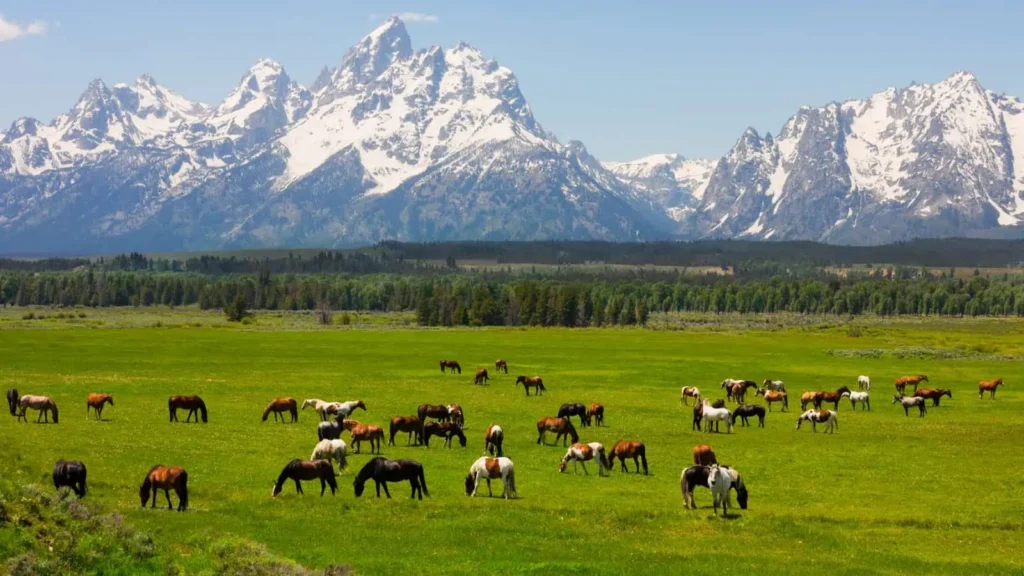
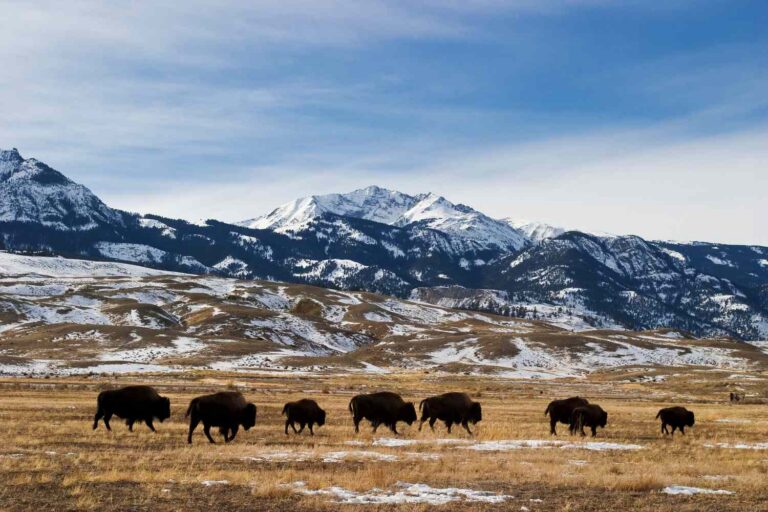
Travel marketing frequently misappropriates the designation of top wildlife viewing in America to denote places where animals show high habituation to human presence, thereby creating a “guaranteed” spectacle. This marketing practice fundamentally misunderstands ecological health. True observation relies on wild, autonomous behavior, which often contrasts with the conditions at high-traffic tourist sites. The most profound encounters typically occur in areas where animals retain their natural wariness, requiring the observer to possess high-level fieldcraft and patience.
When searching for the top wildlife viewing in America, one must distinguish between “spectacle” and “substance.” Spectacle relies on density and proximity, which often disrupts natural behaviors. In extreme cases, this creates a “habituation-stress” loop where wildlife becomes dependent on or aggressive toward humans. Conversely, substance defines the opportunity to witness genuine biological interactions in an environment functioning within its natural parameters. Identifying the right location requires an analysis of land-use history, seasonal migration patterns, and the management intensity of the relevant agency.
Deep Contextual Background
The evolution of wildlife observation in the U.S. remains inseparable from the history of federal land management. From early preservationist ethics that defined the creation of national parks to the more recent “wilderness-as-system” approach, the objective has shifted from protection-as-enclosure to protection-as-connectivity. Early 20th-century policies often prioritized an “exhibit” model, which encouraged visitors to view animals as roadside attractions.
The modern paradigm now acknowledges that anthropogenic stress—noise pollution, light pollution, and direct physical harassment—drastically alters population dynamics. As researchers document the ripple effects of “human swarms” on everything from ungulate migration to predator-prey dynamics, management agencies have implemented stricter quotas, seasonal closures, and behavioral protocols. Understanding this shift is essential; the observer who respects these constraints contributes to the long-term viability of the site, whereas the one who views them as “barriers to access” stands fundamentally out of sync with the ecological reality.
Conceptual Frameworks and Mental Models
-
The Behavioral Integrity Model: This assesses the degree to which wildlife in a given area behaves naturally. An animal that ignores a vehicle at 10 meters differs fundamentally from an animal that has learned to avoid human areas entirely.
-
The “Presence vs. Intrusion” Spectrum: This framework asks the observer to evaluate whether their presence adds neutrally to the landscape or acts as a stressor that requires the animal to adjust its path, feeding, or resting habits.
-
The Ecological Connectivity Framework: This emphasizes that the most significant sightings often occur in “buffer zones” between protected cores, where species move between resources.
-
The Observer-Responsibility Multiplier: This mental model posits that the quality of one’s experience correlates directly with the level of one’s preparation and stillness.
Key Categories and Operational Variations
The following categories outline the landscape of observation, each carrying distinct trade-offs in terms of accessibility, ecological impact, and behavioral quality.
| Category | Primary Focus | Ecological Integrity | Skill Requirement |
| Managed Core | High density/High traffic | Low-Moderate | Low |
| Wilderness Interior | Low density/High autonomy | Very High | Very High |
| Migration Corridors | Seasonal event-based | High | Moderate |
| Marine/Coastal | Dynamic/Species-specific | Moderate-High | High |
Decision logic for selecting a location should follow the “Integrity-Skill Matrix.” If you lack the field experience to navigate remote wilderness, prioritize low-impact, guided options in transition zones rather than attempting to self-direct in high-sensitivity core habitats.
Real-World Scenarios and Decision Logic
Consider the “Roadside Swarm” scenario, common in popular parks where a rare sighting halts traffic. The failure mode is to join the swarm, contributing to the pressure on the animal. The analytical response is to recognize the diminishing returns of the encounter and relocate. By observing the “4D Principles” Distance, Duration, Density, and Direction, the responsible observer creates space, allowing the animal to continue its activity without being funneled or cornered.
Another scenario involves “The Seasonal Migration Trap.” Many sites are publicized as top wildlife viewing in America during specific weeks. The failure mode is the assumption that arrival guarantees a sighting. The decision logic is to prioritize the behavioral window over the calendar date, accepting that nature operates on ecological cues (phenology) rather than human schedules. If the food source is late, the animals will be late; the successful observer is the one who tracks the environmental indicators rather than the tourist calendar.
Planning, Cost, and Resource Dynamics
The resources required for meaningful observation should be viewed as an investment in local capacity.
-
Direct Costs: Permit fees and entrance passes directly fund habitat protection and scientific monitoring. These are the most efficient forms of investment.
-
Indirect Costs: The choice of lodging and transit is equally critical. Selecting low-impact, regional infrastructure keeps revenue within the ecosystem’s support network, minimizing the “leakage” that occurs when tourism capital is siphoned off by external corporations.
-
Opportunity Cost: The cost of “doing nothing,” the requirement for patience and silence, is a luxury that many travelers undervalue.
| Resource Variable | Low-Impact Range | High-Impact Range |
| Temporal Investment | 3–7 days per site | 0.5–1 day per site |
| Distance from Wildlife | 50–100+ yards | <20 yards |
| Infrastructure Reliance | Self-contained/Minimal | Full-service/High-density |
Tools, Strategies, and Support Systems
-
Acoustic and Motion-Sensing Data: Many parks publish ecological health scorecards and monitoring data. Reviewing these provides context on population trends that go beyond a “sighting report.”
-
Field-Ethics Guides: Familiarize yourself with species-specific standoff distances, which are often codified by local management agencies.
-
Local “Naturalist” Networks: Connecting with researchers, local field societies, or non-extractive guides offers a deeper, more accurate view of where species are likely to be found without disturbing them.
-
Phenological Tracking: Use local weather and plant-growth data to predict animal movement patterns, rather than relying on social media “reports” which are often outdated or misleading.
Risk Landscape and Failure Modes
The primary risk in the search for the top wildlife viewing in America is the “compounding impact.” An individual traveler causes minimal disturbance, but thousands of individual decisions to “push a little closer” lead to systemic habitat degradation. This is the “Tragedy of the Commons” in a tourism context.
A critical failure mode is “Species-Specific Obsession.” When the focus is on a single “trophy” animal, the observer loses sight of the wider ecological context. This often leads to increased stress on that specific species, as they are repeatedly targeted by groups of vehicles, effectively creating a “tourist bottleneck” that disrupts feeding or breeding.
Governance, Maintenance, and Long-Term Adaptation
Monitoring the health of a site requires an ongoing review cycle:
-
Threshold Trigger: Managers should establish a “behavioral threshold,” a point at which a species’ response to human presence (e.g., flee response) necessitates a closure of that area.
-
Adaptive Review: After every season, observers should evaluate their own impact. Did my presence alter the behavior of the wildlife? If yes, the strategy must change.
-
Layered Governance: Effective wildlife viewing areas use layered management, a core protected zone with limited access, a surrounding buffer zone for controlled viewing, and an external transit corridor for non-essential traffic.
Measurement, Tracking, and Evaluation
Evaluation must distinguish between qualitative engagement and quantitative spectacle.
-
Leading Indicators: The animal’s initial reaction to your presence; the amount of space between you and the subject; the total lack of “noise pollution” in your immediate vicinity.
-
Lagging Indicators: Whether the animal resumed its previous behavior immediately upon your departure, and the long-term stability of local animal populations.
-
Documentation: Maintain a log not just of “species seen,” but of “behavior observed.” This creates a record of ecological significance that is far more valuable than a mere list.
Common Misconceptions and Oversimplifications
-
Myth: “Habituated wildlife is ‘friendly’.”
Correction: Habituation is a stress-response modification. The animal is not comfortable; it has merely stopped responding to the constant presence of humans, often at a cost to its natural vigilance. -
Myth: “If the animal isn’t running away, it’s fine.”
Correction: Many animals, especially predators, exhibit “frozen” behavior or ignore observers because they are trapped by the crowd, not because they are undisturbed. -
Myth: “Top wildlife viewing in America is found in the most popular parks.”
Correction: While popularity correlates with sightings, it also correlates with the highest levels of human-induced stress. -
Myth: “Photography is not harassment.”
Correction: Any activity that causes an animal to change its course, stop feeding, or abandon a young is, by definition, a disturbance.
Conclusion
The pursuit of the top wildlife viewing in America is, at its best, a form of active environmental participation. It demands a recalibration of our expectations: we are not consumers of scenery, but guests in a complex, functioning home. By prioritizing behavioral integrity over the density of sightings and by accepting the necessity of distance and stillness, we contribute to the longevity of the landscapes we inhabit. The true measure of a successful trip is not found in a portfolio of close-up images, but in the knowledge that one’s presence allowed the ecosystem to continue its cycles undisturbed. This discipline of observation, rooted in ethics and informed by science, is the most powerful tool available for the preservation of wild America.