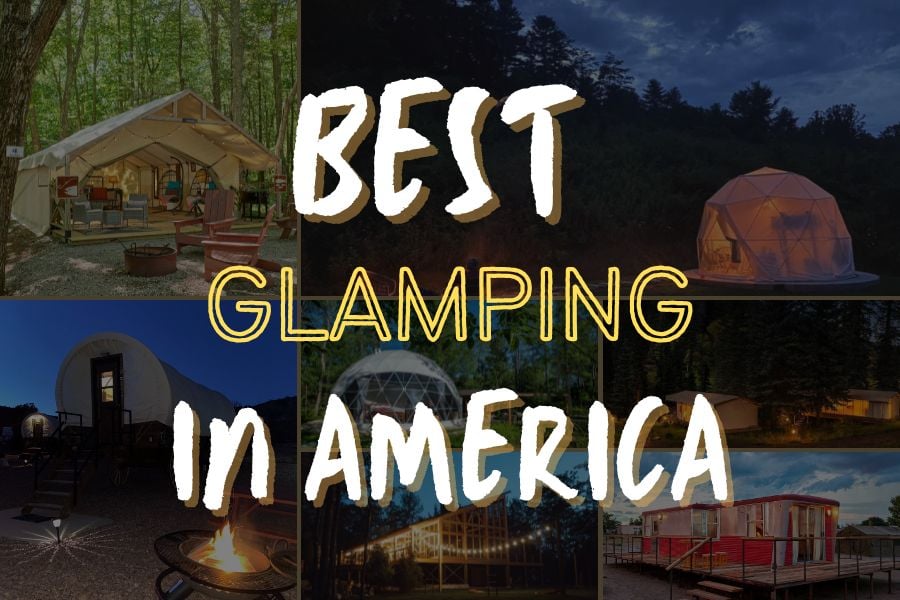
Luxury Glamping Spots USA: A Deep-Dive Strategic Guide
The contemporary hospitality landscape has undergone a profound transformation, moving away from the rigid, standardized models of the mid-20th century toward experiential, place-based accommodations. At the forefront of this shift is the ascent of “glamping,” a portmanteau that, while initially dismissive, has matured into a sophisticated sector of the travel industry. This evolution represents a synthesis of the human desire for wilderness immersion and the modern expectation for high-fidelity comfort. For the sophisticated traveler, the challenge is no longer merely finding a location, but discerning between genuine, curated experiences and the wave of “greenwashed” or hyper-commercialized properties that have flooded the market.
True luxury in an outdoor setting is defined not by the presence of high-thread-count linens or artisanal minibars, but by the integration of the accommodation into its surrounding ecosystem. A property that imposes a high-impact, resource-intensive structure onto a fragile landscape, regardless of the interior finishes, fails to meet the standard of truly elevated, responsible travel. Conversely, properties that prioritize biophilic design, respect for local topography, and low-footprint operations offer a depth of experience that is rare in the high-volume resort world. Navigating this sector requires a systematic approach to due diligence.
Understanding “luxury glamping spots USA.”
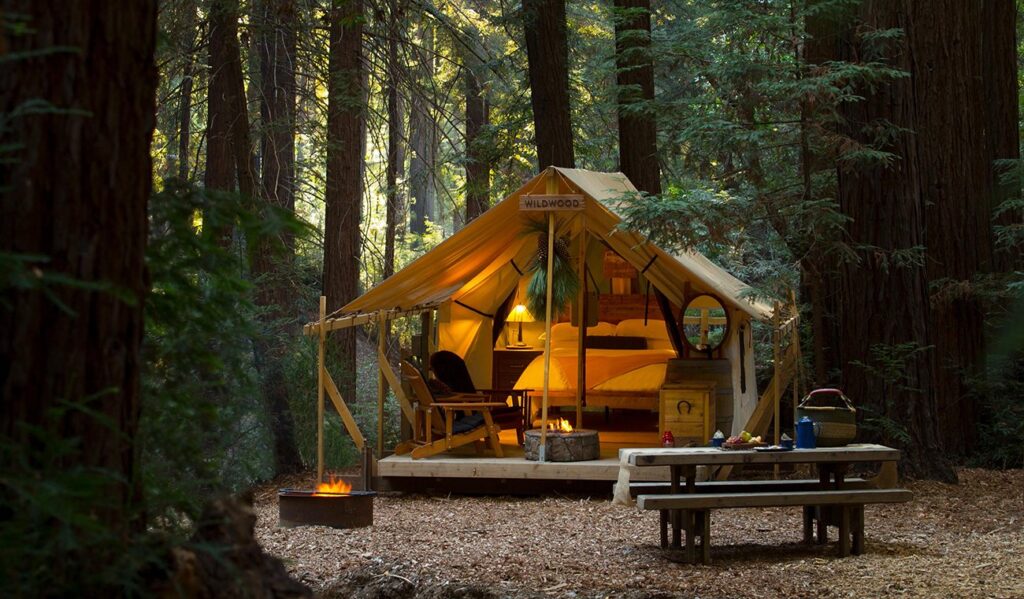
The term “luxury glamping spots USA” has become a semantic catch-all, obscuring a vast spectrum of operational quality. At one end, it describes world-class, sustainably managed retreats that serve as stewards of private conservation lands. At the other end, it refers to mass-market campgrounds that have simply added a few canvas tents to a standard RV lot. The misunderstanding often begins with the assumption that all such sites are created equal; in reality, the disparity in land-use ethics, infrastructure quality, and guest-to-wilderness ratios is immense. To identify the best locations, one must look past the “glamorous” label to understand the structural commitment of the operator to the destination.
The risk of oversimplification is that the traveler treats the outdoor experience as a standard hotel stay. However, a luxury outdoor site is an extension of its environment, susceptible to local weather patterns, seasonal ecological cycles, and the reality of living in a semi-permeable structure. The “luxury” in this context should be understood as the quality of access provided, not the presence of standardized, city-like amenities. When investigating the best of these properties, look for those that leverage their specific geography using natural light, topography, and local climate rather than trying to force a traditional, climate-controlled, opaque building environment onto an outdoor setting.
Deep Contextual Background
Historically, the marriage of comfort and outdoor exploration was exclusive, restricted to the safari traditions of the late 19th and early 20th centuries, where the logistical weight of a tented camp was secondary to the mission of the expedition. The modern revival, which began to permeate the U.S. market in the 2010s, was driven by a combination of social media’s visual culture and an urban population’s desire to “reconnect” with nature without the barrier of entry presented by traditional technical camping.
The rapid growth of the sector in the 2020s transformed it from a niche hobby into a multi-billion-dollar asset class. This professionalization brought significant advancements in engineering geodesic domes, high-performance canvas structures, and modular, off-grid systems, but it also introduced the pressures of the corporate hospitality model. Today, the most resilient properties are those that have successfully navigated this transition, maintaining the intimacy of the original “boutique” model while operating with the precision and reliability of high-end boutique hotels.
Conceptual Frameworks and Mental Models
-
The Land-to-Unit Ratio: An essential indicator of privacy and ecological impact. High-tier properties prioritize distance between units to preserve the silence and intimacy of the environment.
-
The Regenerative-Hospitality Model: This evaluates whether the property is “net-positive.” Does the presence of the resort improve the biodiversity or habitat quality of the site, or does it merely maintain it?
-
The Logistical Transparency Test: Does the property clearly articulate its waste management, energy sourcing, and water consumption? Properties that hide these elements are often those with the lowest operational integrity.
-
The Adaptive-Design Paradigm: High-quality sites are built to accommodate their specific climate through passive design—maximizing solar gain, optimizing airflow, and minimizing permanent environmental scarring.
Key Categories and Operational Variations
| Category | Typical Structure | Primary Advantage | Ethical Risk |
| Eco-Lodge/Retreat | Permanent high-spec structures | Long-term sustainability | High capital/low flexibility |
| Safari-Style Tented | Canvas on raised decks | Maximum immersion | Fabric wear/climate control |
| Architectural Domes | Geodesic domes | High-design/Stargazing | Thermal management |
| Adaptive-Reuse | Converted trailers/structures | Lower carbon footprint | Limited “nature” integration |
Real-World Scenarios and Decision Logic
Consider the “Peak-Season Saturation” scenario. Many high-profile sites face intense pressure during peak migration or climate windows. The failure mode is booking during these times, which leads to overcrowded communal areas and stressed service staff. The decision logic is to target the “shoulders” of the weeks surrounding the peak, where the ecological experience remains high but the operational stress on the site is lower, yielding a more authentic encounter.
Another critical scenario involves “The Off-Grid Trade-off.” A site markets itself as “off-grid luxury.” The constraints are the limitations on power for heating or high-energy appliances. Before booking, the traveler must decide if they are seeking a truly off-grid experience or merely a remote one. If the expectation is consistent 72-degree room temperatures and high-speed streaming, an off-grid location will be a point of friction, not relaxation.
Planning, Cost, and Resource Dynamics
The economic reality of high-end outdoor hospitality is driven by the cost of maintaining remote infrastructure.
-
Fixed vs. Variable Costs: Unlike urban hotels, outdoor resorts have high “hidden” costs, including road maintenance, independent power systems, and staff logistics. Expect higher nightly rates to reflect this complexity.
-
The Value of Exclusivity: Scarcity is a core component of the pricing. A property with 10 units on 200 acres will inherently charge more than one with 50 units on 10 acres, because the luxury provided is the relative absence of other people.
-
Resource Variability: Be prepared for fluctuations in comfort due to external conditions. This is the nature of the medium. The “best” traveler in this space is one who views these variations as part of the experience rather than a failure of service.
Tools, Strategies, and Support Systems
-
Topographic Mapping: Use satellite imagery to verify the actual location of a “wilderness” site. Is it adjacent to a highway or an industrial area? Maps don’t lie.
-
Regulatory Vetting: Check if the property has a history of zoning disputes or environmental complaints. A site that is constantly battling its neighbors is rarely a bastion of tranquility.
-
Local Stewardship Check: Verify if the property supports local conservation projects or land trusts.
-
Operational Maturity Audit: Avoid “soft-opening” sites if you value consistency. High-end outdoor resorts take 2–3 seasons to stabilize their maintenance and guest-service cycles.
Risk Landscape and Failure Modes
The primary systemic risk is “Institutional Stagnation,” where a property fails to maintain its infrastructure, leading to mold, failing utilities, or degraded furniture, common issues in harsh climates. A secondary risk is “The Marketing Disconnect,” where professionally staged photography suggests a level of isolation that does not exist in reality. When evaluating potential spots, look for “guest-generated” imagery on third-party platforms to get a sense of the actual site condition versus the brand’s professional portfolio.
Governance, Maintenance, and Long-Term Adaptation
A superior property manages itself through:
-
Seasonal Hardening: Does the property fully close during extreme weather to perform maintenance, or does it try to stay open year-round? Properties that pause for maintenance are generally more reliable.
-
Impact Monitoring: Leading properties track the health of the local flora and fauna, adjusting trail access and activity schedules to minimize ecological disturbance.
-
Feedback Loops: The best operators treat guest feedback not as a PR metric, but as an operational input for system repairs.
Measurement, Tracking, and Evaluation
-
Leading Indicators: The responsiveness of management to pre-visit inquiries; the transparency of information regarding the off-grid systems (power, water, waste).
-
Lagging Indicators: The consistency of reviews regarding “hidden” issues like utility noise (generators) or plumbing performance.
-
Documentation: Review the site’s “Sustainability Commitment” or “Site Handbook”—a high-quality property will provide this upon request, detailing their philosophy and operational boundaries.
Common Misconceptions and Oversimplifications
-
Myth: “All glamping is eco-friendly.”
Correction: A tent structure can have a higher carbon footprint than a concrete building if it is poorly insulated and energy-inefficient. -
Myth: “Glamping is just ‘expensive camping’.”
Correction: In its best form, it is a curated architecture that enables a unique style of engagement with a place. -
Myth: “Privacy is guaranteed.”
Correction: Unless specified, assume standard density. Always request a site map to verify unit placement.
Conclusion
The search for the highest-caliber outdoor accommodations is an exercise in discerning the difference between aesthetic trends and operational excellence. The best experiences are found where architecture, stewardship, and hospitality are balanced with an understanding of the site’s unique ecological constraints. By applying a rigorous, systems-based approach to your selection process, you ensure that your time and financial resources support operators who view themselves as guardians of their landscape rather than mere extractors of value. True, lasting luxury in this sector is not found in the superficiality of the decor, but in the seamless, respectful integration of the guest into the natural world.