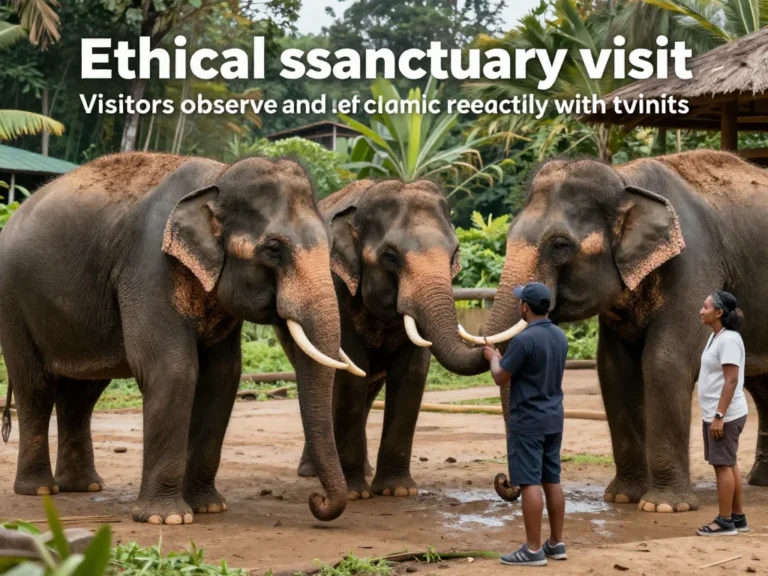
Sustainable Tourism Guide: A Systems-Based Approach
The global movement of people is perhaps the most defining characteristic of the modern era, a vast, kinetic system that redistributes capital, shapes local identities, and alters physical landscapes. Yet, this mobility carries profound environmental and socioeconomic costs that have historically been externalized by the travel industry. To move through the world in the twenty-first century is to participate in a complex, high-stakes infrastructure that necessitates a fundamental recalibration of what it means to be a visitor. The challenge lies in transitioning from a model of passive consumption to one of active, restorative stewardship.
At the heart of this transition is the recognition that no place on earth exists as a static backdrop for human observation. Every destination is an integrated ecosystem, a convergence of historical layering, biological diversity, and community-led governance. When travel is stripped of its reflexive nature, it becomes a force for homogenization, eroding the very cultural and environmental characteristics that make a location worth visiting. The objective, therefore, is not to cease movement, but to refine the mechanics of our presence so that it aligns with the long-term viability of the territories we occupy.
This analytical framework is designed for the practitioner of deep exploration. It eschews the superficial checklists of standard travel advice in favor of a systems-based investigation into the operational realities of travel. By dissecting the structural dependencies of global tourism and providing actionable frameworks for decision-making, we establish a definitive baseline for those committed to a path of higher accountability. This is an invitation to engage with the world not as a collection of destinations, but as a series of interconnected, fragile, and historically rich human and ecological systems.
Understanding “sustainable tourism guide.”
The concept of a sustainable tourism guide is frequently misidentified as a static set of rules for the traveler to follow. In reality, it serves as a dynamic, context-dependent methodology for navigating the tensions between economic activity and resource protection. Many industry participants mistakenly assume that sustainability is a certification one achieves; in truth, it is a persistent operational state that requires continuous, granular adjustment. Oversimplifying this concept, treating it as a “green” badge invites performative engagement, which often masks deeper systemic issues, such as leakage, where the economic benefits of tourism bypass the local population entirely.
The risk of this oversimplification is twofold. First, it fosters a sense of moral license among travelers, who may assume that staying at an “eco-labeled” property absolves them of the wider impact of their transit and consumption patterns. Second, it shifts the focus away from the more difficult, structural work of advocating for land tenure, fair labor practices, and community-led infrastructure. A truly effective guide to sustainable movement requires a shift in mindset: seeing the traveler not as an end-user of a product, but as a stakeholder in the future of the host community and its landscape.
Deep Contextual Background
Historically, the industry matured under the influence of mass-market, volume-driven growth. Post-World War II infrastructure development, the democratization of air travel, the creation of standardized hotel chains, and the rise of inclusive packages normalized the view of tourism as an extractive service industry. Destinations were effectively mined for their aesthetic and cultural value, with little regard for the carrying capacity of their ecosystems or the integrity of their traditional governance structures.
The turn toward a more sustainable ethos was not an immediate industry consensus but a reactive development spurred by the visible collapse of specific ecosystems and the erosion of local cultural fabrics. Today, the movement is in a state of rapid, if inconsistent, evolution. Current efforts focus on “Regenerative Tourism,” a framework that seeks not only to minimize harm but to proactively enhance the host destination’s social and ecological resilience. This paradigm shift requires the integration of diverse perspectives, including indigenous knowledge, ecological monitoring, and multi-scalar economic data.
Conceptual Frameworks and Mental Models
-
The Carrying Capacity Threshold: A model that calculates the maximum intensity of human presence a specific site can accommodate before degradation occurs, moving beyond raw numbers to account for seasonal stress and infrastructure fatigue.
-
The Stakeholder Value Loop: A mental model that maps the flow of revenue within a destination. It measures how much capital remains in the local economy, comparing the impact of a community-owned cooperative against a global franchise.
-
The Intentionality vs. Impact Ratio: A heuristic for evaluating one’s presence. It encourages the traveler to weigh the depth of their interaction against the physical footprint required to achieve it.
-
The Ephemeral Impact Model: A strategy for minimizing long-term damage, prioritizing systems such as mobile infrastructure that can be removed without leaving physical or social scars on the landscape.
Key Categories and Operational Variations
Effective exploration of sustainable systems varies by the nature of the engagement.
| Category | Primary Focus | Economic Model | Ecological Footprint |
| Community-Led Conservation | Direct Local Benefit | Cooperative | Low |
| High-Value, Low-Volume | Ecological Preservation | Premium Pricing | Very Low |
| Urban Revitalization | Adaptive Reuse | Institutional | Moderate |
| Indigenous-Led Heritage | Cultural Continuity | Autonomy-based | Low |
| Agrarian/Pastoral Immersion | Land Management | Small-Scale | Moderate |
Operational decision logic necessitates evaluating a category based on the host community’s capacity to absorb external actors. For instance, a high-value, low-volume approach may be ecologically sound in a remote wilderness, but it can be socially destructive in a fragile urban village.
Real-World Scenarios and Decision Logic
Consider the “Infrastructure Pressure” scenario. A traveler visits a destination where the local water table is declining. The decision logic must move beyond individual conservation, taking shorter showers, to a systemic choice: selecting accommodation that operates on a closed-loop water system or supports community-level infrastructure. Failure to account for this second-order effect renders personal efforts largely performative.
In another scenario, “The Artifact Displacement,” a visitor considers purchasing local crafts from a transit-hub souvenir shop. The second-order effect is that these mass-produced items drain capital away from the local artisans. The decision logic dictates seeking out cooperatives or village-level markets, ensuring the capital remains within the local artisan ecosystem.
Planning, Cost, and Resource Dynamics
The economic management of any sustainable tourism guide implementation requires a departure from lowest-common-denominator pricing.
-
Direct Costs: These often include a premium for locally sourced labor, smaller-scale energy and waste management systems, and transparent community-benefit fees.
-
Opportunity Costs: Opting for slower, land-based transit or locally owned providers often consumes more time and requires a higher degree of logistical flexibility than standard travel options.
-
Resource Variability: The most sustainable options, such as those operating in remote, community-managed regions, often have limited digital footprints, requiring a different approach to research and logistical support.
| Planning Component | Cost Range (USD/Day) | Variability Driver |
| Community Cooperative | $80–$200 | Local economic conditions |
| Regenerative Boutique | $300–$800+ | Infrastructure investment |
| Independent/Self-Sufficient | $50–$150 | Seasonality/Access |
Tools, Strategies, and Support Systems
-
Supply Chain Transparency Tools: Platforms that allow for the vetting of a destination’s actual benefit distribution rather than relying on marketing claims.
-
Local Land Use Maps: Understanding where one is walking or lodging is critical; knowing if an area is protected or under development allows for informed engagement.
-
Community-Owned Directories: Relying on resources managed by locals rather than international travel aggregators.
-
Ecological Audit Data: Accessing regional reports on water quality, soil health, and biodiversity that reflect the true state of the destination.
Risk Landscape and Failure Modes
The taxonomy of risk includes “Greenwashing” (performative sustainability), “Ecological Overload” (even well-intentioned travel exceeding capacity), and “Dependency Dynamics” (creating a local economy solely reliant on external visitors). Compounding risks emerge when travelers assume their presence is neutral; it is not. The most prevalent failure mode is the failure to adjust one’s presence to match the real-time ecological or social constraints of the destination.
Governance, Maintenance, and Long-Term Adaptation
Sustainability requires governance structures that operate at the local, regional, and national scales.
-
Monitoring Cycles: Regular audits are necessary, not just for the operator but for the entire regional ecosystem.
-
Adaptive Triggers: The implementation of hard visitor caps once specific indicators of water availability, noise levels, and trail degradation cross-defined thresholds.
-
Long-Term Checklist: Any robust system should include a review of land use policies, labor standard audits, and community-based economic impact assessments.
Measurement, Tracking, and Evaluation
-
Leading Indicators: Changes in local employment diversity, the number of independent businesses launched in a destination, and the health of key indicator species.
-
Lagging Indicators: The socio-economic stability of the community over a decadal scale, the long-term integrity of the physical landscape, and the retention of cultural practices.
-
Documentation: Regional maintenance logs, wage parity reports, and community-led surveys on the quality of life as impacted by visitation.
Common Misconceptions and Oversimplifications
-
Myth: “Everything ‘local’ is good.”
Correction: Localized systems can be just as extractive as global ones; one must verify the equity within the local structure. -
Myth: “You can offset your footprint.”
Correction: Carbon offsetting is a palliative, not a solution; the priority must be the absolute reduction of demand. -
Myth: “Sustainability is expensive.”
Correction: True sustainability often requires lower material consumption, potentially lowering costs if one eschews unnecessary luxury. -
Myth: “I am just one person.”
Correction: Collective behavior shapes market infrastructure; individual decisions create the demand that drives industry policy.
Ethical, Practical, and Contextual Considerations
Ethical travel requires an acceptance of the visitor’s limitations. It is an exercise in restraint, choosing not to visit certain areas during peak fragility or choosing not to engage in activities that demand excessive resources. It also involves an awareness of the power dynamic between the visitor and the host, ensuring that the former does not inadvertently dictate the development trajectory of the latter.
Conclusion
The pursuit of sustainable travel is a commitment to the discipline of observation and the ethics of presence. It is a transition from being a visitor who consumes a destination to being an actor who contributes to its vitality. By relying on rigorous, systems-based frameworks rather than the marketing lexicon of the industry, one can navigate the world with a higher degree of accountability. Every step in this sustainable tourism guide is an opportunity to choose depth over breadth and resilience over extraction. As we move toward a future of increasingly complex human movement, the responsibility falls upon the individual to recognize that the most significant discovery is the realization that their presence is always a permanent part of the place they have come to know.