Hidden Wildlife Getaways USA: A Guide to Responsible Ecological Observation
The American wilderness is frequently conceptualized through a narrow lens of iconic, high-traffic national parks. While these protected corridors hold undeniable ecological significance, they often represent only the most visible nodes in a vast, interconnected network of biological sanctuaries. The search for genuine wild experience requires moving beyond these central hubs toward peripheral landscapes where human presence is not an omnipresent backdrop, but a secondary, managed influence.
True wilderness engagement demands an analytical approach to geography and biology. It necessitates the ability to identify ecosystems that possess high biodiversity but low visitor volume, places where the absence of curated tourism infrastructure allows for authentic observation. This is not merely about finding “quiet” places; it is about seeking out environments where the natural order remains dominant, and the visitor is an observer of processes rather than a consumer of spectacles.
This guide provides a structural framework for identifying and navigating these sensitive sites. It rejects the superficiality of typical travel writing, prioritizing instead the principles of conservation, ecological literacy, and systemic resilience. By reframing travel as a disciplined exercise in observation, we can ensure that these delicate sanctuaries are respected, protected, and preserved for those who approach them with the necessary rigor.
Understanding “Hidden Wildlife Getaways USA.”
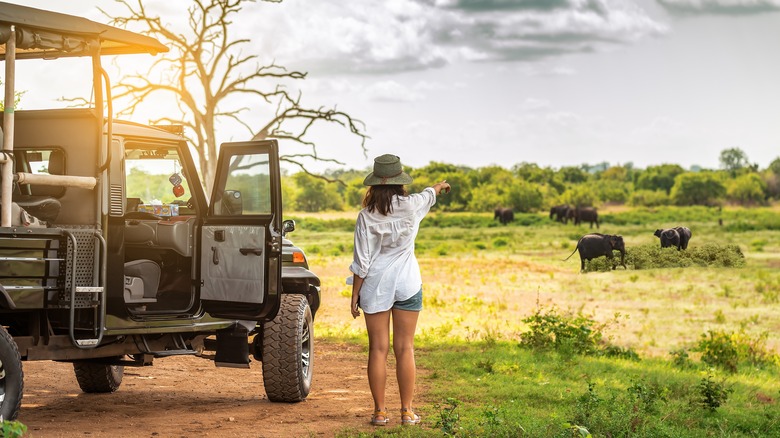
The concept of hidden wildlife getaways in the USA is inherently paradoxical. By virtue of being identified in a public document, a location’s status as “hidden” is immediately compromised. Therefore, the goal here is not to curate a static list of secret coordinates, but to provide a methodology for discerning which areas maintain high ecological integrity despite their obscurity. The term “hidden” should be interpreted as “low-velocity” landscapes that require significant effort to access and maintain, thereby deterring mass-market tourism.
A frequent error is the assumption that remote regions are automatically resilient. In reality, isolated ecosystems are often the most fragile. A small, remote alpine meadow may support a specialized species population that is highly sensitive to minimal human disturbance. Oversimplification leads to the risk of “discovery-induced degradation,” where popularization of a hidden site leads to localized collapse of biodiversity.
A responsible approach requires a shift in perspective. Instead of viewing these sites as destinations to be “conquered” or “checked off,” one must treat them as research-grade environments. The objective is to understand the interplay of geological, botanical, and zoological forces, acknowledging that our presence is a variable that must be mathematically minimized to avoid altering the system we aim to observe.
Historical Context and the Evolution of Remote Access
The American approach to wilderness has historically been characterized by the tension between extraction and preservation. The early 20th century saw the creation of large-scale, accessible federal parks, which were designed to foster national pride and recreational consumption. Consequently, the “remote” experience was pushed into the peripheries of state forests, wilderness study areas, and private conservation land.
As technology improved access, specifically the advent of high-clearance vehicular transport and widespread satellite mapping, these peripheral areas became increasingly vulnerable. The modern era of conservation has thus shifted toward “active non-interference.” This philosophy dictates that while we should know where these wild zones are, we must also exercise extreme restraint in how we interact with them. Today, the most remote areas are often those protected not by fences, but by the physical and intellectual labor required to reach them.
Conceptual Frameworks for Wilderness Selection
-
The Energy-Return Threshold: Evaluate the ratio of the physical and logistical energy expended to reach a site versus the ecological quality of the observation. If the barrier to entry is low, the ecological value is almost certainly being diluted by volume.
-
The Sensitivity Index: Categorize a site based on its recovery time. A sandy shoreline recovers from footprints quickly; an alpine tundra lichen field may take decades.
-
The Seasonal Lag: Understand that high-quality wildlife observation often happens during periods of low comfort for humans (e.g., late autumn, early spring), when human traffic is naturally minimized.
-
The Data-Correlation Filter: Before visiting, cross-reference local ecological reports. If a site has no active conservation management or scientific monitoring, it is likely an “ecological orphan” vulnerable to exploitation.
Taxonomy of Sensitive Ecosystems
| Ecosystem Type | Primary Sensitivity | Optimal Observation Strategy |
| Boreal Peatlands | Hydrological stability | Perimeter observation only |
| High Desert Springs | Water-dependent species | Static, long-duration blinds |
| Intertidal Refugia | Micro-faunal disturbance | Non-destructive, low-tide traversal |
| Old-Growth Basins | Understory trampling | Strict adherence to established game trails |
Decision logic requires matching the traveler’s skill set to the site’s sensitivity. If one cannot navigate without creating new paths, one should avoid high-sensitivity basins entirely.
Analytical Scenarios for Strategic Visitation
Scenario 1: The Avian Migration Corridor
-
Constraints: High-precision observation required during a narrow two-week window.
-
Decision Path: Identify a peripheral wetland not listed in major tourism databases. Perform pre-visit reconnaissance of local water-quality reports to confirm ecological health.
-
Failure Mode: Arriving during a peak weekend based on general historical averages rather than real-time biological data, leading to overcrowding and bird flight-response.
Scenario 2: The Apex Predator Range
-
Constraints: Extremely low probability of sighting; high risk of human-wildlife conflict.
-
Decision Path: Engage with local scientific bodies to understand current predation habits. Maintain a distance that keeps the human factor beneath the threshold of the animal’s stress detection.
-
Failure Mode: Attempting to influence the animal’s movement through noise or tracking, which disrupts the natural hunting cycle and endangers both parties.
Resource Dynamics and Economic Trade-offs
The economic structure of visiting hidden wildlife getaways in the USA is inherently inefficient by design.
-
Indirect Costs: The requirement for specialized gear, high-level map-reading skills, and sufficient time to allow for weather-induced delays.
-
Opportunity Cost: Choosing a hidden site means sacrificing the ease of serviced amenities.
-
The Resource Hierarchy:
-
Tier 1 ($500-$1,500): Low-infrastructure camping, high self-reliance, focused on local habitat study.
-
Tier 2 ($1,500-$3,000): Remote research-station lodging, scientific partnership, high biodiversity payoff.
-
Tier 3 ($3,000+): Expedition-grade logistics, private conservation partnerships, minimal ecological footprint.
-
Risk Management and Failure Modes
The “Discovery Trap” is the most significant risk. When a traveler inadvertently publishes high-resolution details of a sensitive site, they trigger an influx of less-prepared visitors. This leads to the Compounding Impact Effect: trail braiding, littering, and wildlife habituation occur exponentially as visitor numbers rise. Effective governance of one’s own behavior, refraining from geotagging, obscuring site identifiers, and vetting others who seek this data, is essential.
Governance, Maintenance, and Long-Term Adaptation
A robust visitation plan includes an Impact Audit Cycle. After visiting a sensitive site, ask:
-
Did my presence alter the behavior of the resident wildlife?
-
Did I leave any trace of my traversal on sensitive soil or vegetation?
-
What variables would change to make this visit more sustainable in the future?
Maintain a “Layered Checklist” that includes biosecurity protocols (e.g., cleaning boots to prevent invasive species spread), noise discipline, and a commitment to leaving the site in a better condition than it was found.
Common Misconceptions
-
“Leave No Trace is enough”: It is a starting point, not an end goal. Active restoration (e.g., picking up non-native trash, reporting invasive species) is better.
-
“Public land is mine to use”: Public land is held in trust; the visitor is a guest, not an owner.
-
“High-end gear minimizes impact”: Gear is neutral; behavior is the variable.
-
“Remote means safe”: Remote sites lack emergency infrastructure; safety is solely the responsibility of the traveler.
-
“Wildlife photos prove conservation”: They often prove only the photographer’s access; they do not necessarily contribute to conservation.
-
“The wilderness needs humans”: Most wilderness functions perfectly well without human input.
Conclusion
The pursuit of hidden wildlife getaways in the USA should be viewed as a privilege requiring intense, disciplined preparation. It is an engagement with landscapes that offer no promise of spectacle and no requirement for human consumption. By prioritizing ecological integrity over the desire for novelty, the serious practitioner helps ensure that these sanctuaries remain as they should be: complex, autonomous, and resilient. The goal is not to find a getaway, but to find a way to observe the world without becoming the dominant force within it.