Best Eco Lodge Options: A Guide to Authentic Sustainable Travel
The shift toward responsible hospitality is fundamentally altering the global tourism landscape. For decades, the industry operated on an extractive premise, treating pristine natural environments as scenic backdrops for consumer activity. Today, a sophisticated segment of the market, comprising travelers, conservationists, and policy researchers,s demands a transition to regenerative models. In this framework, lodging does not merely “do no harm”; it functions as an active participant in the restoration and maintenance of its host ecosystem.
Identifying genuinely sustainable accommodation requires moving beyond the aesthetic markers often presented in marketing collateral. True environmental stewardship is rarely visible to the casual observer; it is embedded in the invisible infrastructure of a property, including water-treatment cycles, energy-load management, and the socio-economic integration of the local labor force. Discernment in this sector necessitates a move away from superficial “green” branding toward an interrogation of operational mechanics.
The objective of this analysis is to provide a rigorous framework for evaluating high-caliber sustainable lodging. By moving past the oversimplified recommendations common in digital discourse, we focus on the systemic logic that distinguishes exceptional properties from those merely leveraging environmental terminology. To identify the best eco lodge options, one must cultivate a lens of intellectual rigor that demands verifiable performance metrics and long-term ecological commitment.
Understanding “best eco lodge options.”
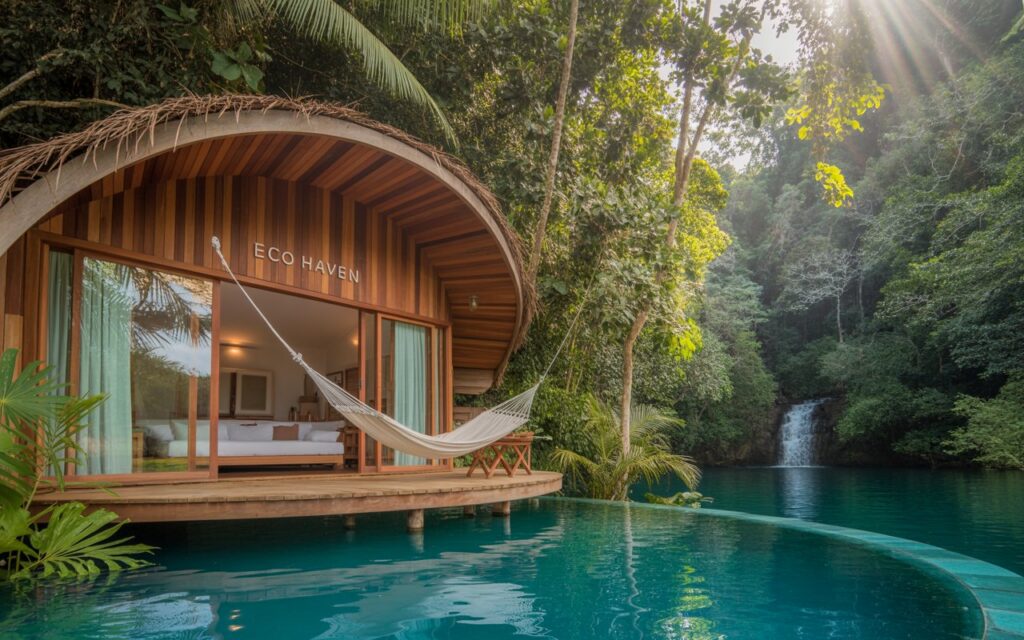
The nomenclature of the sustainable travel sector is plagued by ambiguity. To successfully navigate the search for the best eco lodge options, one must first decouple authentic operational commitments from performative signaling. A frequent error is to conflate isolation with sustainability; a lodge located in a remote mountain range may appear environmentally sound due to its surroundings, yet it may lack any robust waste-treatment system, essentially dumping greywater directly into sensitive watersheds.
The primary risk of oversimplification lies in focusing on single-metric environmentalism. An operator might highlight solar-powered lighting while ignoring the massive carbon footprint of their food supply chain or their reliance on imported, fossil-fuel-intensive materials. True excellence is defined by a multi-layered commitment to the Triple Bottom Line: social equity, environmental restoration, and economic viability. The best eco lodge options provide, as a baseline, publicly accessible impact data. They move beyond vague descriptors, offering concrete evidence of how they manage their externalities.
Deep Contextual Background
Sustainable lodging emerged from the intersection of conservation biology and field research in the latter half of the 20th century. Early pioneers were often scientists who required functional, low-impact bases for observing biodiverse ecosystems. These structures were defined by utility: managing limited water, harvesting power from site-specific sources, and minimizing physical site disturbance.
Over time, this field evolved from a niche scientific necessity into a commercial sector. By the early 2000s, the concept was heavily commercialized, leading to the proliferation of “eco” branding that often lacked technical substance. The current era, however, is witnessing a maturation. Modern leaders in the field have shifted from a “neutral” goal simply reducing harm to a “restorative” objective. This involves land-reforestation efforts, the preservation of indigenous knowledge systems, and the implementation of advanced circular engineering. The best eco lodge options today are those that have moved past the “don’t touch” model of conservation to a “co-evolve” model, where the presence of the lodge serves as a financial and technical catalyst for the surrounding environment.
Conceptual Frameworks and Mental Models
Navigating the landscape requires frameworks that mitigate the influence of marketing.
-
The Carrying Capacity Model: This assesses whether a property respects the physical and social thresholds of its environment. It focuses on the guest-to-land ratio and the resilience of the ecosystem to human interaction.
-
The Circular Economy Model: This treats all inputs, water, energy, and organic matter as resources to be cycled within the property’s system rather than disposed of as waste.
-
The Social License to Operate (SLO): A framework measuring the degree of acceptance by the local community. A lodge is not truly sustainable if its presence creates a socio-economic enclave that operates in isolation from the local population.
-
The Thermodynamic Input-Output Model: A technical framework evaluating the energy cost of maintaining guest comfort. It questions the necessity of climate control systems in environments where passive architecture could suffice.
Key Categories and Operational Variations
Lodging types are defined by their primary operational orientation. Understanding these variations is essential for matching one’s goals with the correct property.
| Category | Primary Objective | Main Trade-off |
| Conservation Hubs | Species/Habitat restoration | Limited guest amenities |
| Community Enterprises | Local economic sovereignty | Variable infrastructure |
| Regenerative Hotels | Active landscape improvement | High capital costs/Pricing |
| Biophilic Retreats | Human-nature immersion | Higher carbon footprint (design) |
| Research Stations | Knowledge dissemination | Access/Availability constraints |
Decision logic should prioritize the intended outcome. If the goal is to fund habitat restoration, a conservation hub is the superior choice. If the priority is cultural integration, community-based enterprises offer the most significant socio-economic return. The best eco lodge options generally fall into these distinct categories, rather than trying to be a “hybrid” of everything, which often leads to operational dilution.
Real-World Scenarios and Decision Logic
Consider the coastal mangrove scenario. The constraint here is the vulnerability of the root systems and the fragility of the marine nutrient cycle. A property in this environment must address “second-order effects” such as the impact of light pollution on nocturnal sea life or the unintended consequence of shoreline erosion caused by boat traffic. Failure occurs when a lodge focuses on “plastic-free” policies but ignores the chemical runoff from its laundry or dishwashing systems.
In contrast, the high-altitude alpine scenario presents challenges related to cold-weather insulation and waste management. In frozen environments, biological waste treatment slows down, necessitating mechanical or chemical processes that must be carefully managed to prevent soil contamination. The best eco lodge options in such extreme biomes are those that have invested in passive solar heating and modular, low-impact sewage treatment systems that operate within the limitations of the local geography.
Planning, Cost, and Resource Dynamics
The economic reality of high-performance sustainable lodging is frequently misunderstood. High prices should not necessarily be associated with luxury; they are often the result of the substantial capital expenditure required for sustainable infrastructure.
-
Direct Costs: Infrastructure for renewable power grids, sophisticated greywater systems, and the preservation of large tracts of private land for conservation.
-
Indirect Costs: The requirement for a highly skilled local workforce capable of managing sophisticated technology and conservation monitoring programs.
-
Resource Variability: The cost per unit of resource (like water or power) is higher in remote, sustainable facilities because they cannot rely on centralized, subsidized municipal utilities.
Tools, Strategies, and Support Systems
To conduct due diligence beyond the marketing surface, travelers should utilize a specialized toolkit:
-
Environmental Management Plans (EMP): Request to see if the property has a documented, time-bound plan for energy and water reduction.
-
GSTC Benchmarking: Use the Global Sustainable Tourism Council (GSTC) criteria as a rubric for assessing property policies.
-
Procurement Audits: Inquire about the percentage of total supplies sourced from within a 100-kilometer radius.
-
Local Wage Transparency: Evaluate whether the property provides data on its local hiring and skills-training programs.
-
Biodiversity Reporting: Check if the property publishes annual species counts or landscape health assessments.
-
Waste-Flow Tracking: Look for information on what happens to non-compostable waste (e.g., electronic or construction materials).
Risk Landscape and Failure Modes
Sustainability in the hospitality sector is prone to systemic failures. Ecological overreach is a recurring risk, where the popularity of a destination leads to a level of foot traffic that exceeds the natural carrying capacity of the land. Social fragmentation occurs when a lodge acts as a “gilded cage,” providing high-end amenities for guests while failing to invest in the basic infrastructure of the surrounding village.
Compounding these risks is the “governance gap.” Many lodges are owned by remote parent companies that lack the local context to recognize when their environmental protocols are failing. The best eco lodge options are almost always those characterized by decentralized management, allowing on-site staff to adapt operational protocols based on immediate ecological feedback.
Governance, Maintenance, and Long-Term Adaptation
A lodge’s sustainability is a dynamic, not static, state. It requires a rigorous maintenance cycle:
-
Monitoring Loops: Implementation of seasonal environmental assessments.
-
Adjustment Triggers: Pre-defined thresholds (e.g., if water table levels drop by X%, occupancy must be reduced by Y%).
-
Layered Checklists: A routine maintenance schedule that differentiates between daily operational needs and long-term restorative maintenance, such as native-species planting or equipment upgrades.
Measurement, Tracking, and Evaluation
Evaluation must prioritize data over sentiment.
-
Leading Indicators: The extent of investment in on-site research facilities or formal partnerships with local environmental NGOs.
-
Lagging Indicators: Total energy consumed per guest-night, normalized against local, non-sustainable equivalents.
-
Qualitative Signals: The quality of interaction between the lodge and the local community—is it based on employment, or is it based on collaborative land-use planning?
Common Misconceptions and Oversimplifications
-
Myth: Using local materials (stone, bamboo) automatically makes a building sustainable.
Correction: Without advanced thermal design, these materials can lead to inefficient energy use. -
Myth: “Off-grid” is a synonym for eco-friendly.
Correction: A fossil-fuel-powered generator is off-grid but environmentally destructive. -
Myth: Carbon offsetting compensates for poor building design.
Correction: Offsets are a final mitigation step, not a substitute for architectural efficiency. -
Myth: Remote lodges are inherently “greener.”
Correction: Remoteness often forces higher carbon footprints for food and waste logistics. -
Myth: All “green” certifications are equal.
Correction: There is a wide spectrum between third-party, science-based audits and self-funded, marketing-focused “eco-star” ratings.
Ethical, Practical, and Contextual Considerations
The ultimate goal of sustainable travel is to balance the privilege of mobility with the responsibility of preservation. It requires acknowledging the “resource disparity” between the guest and the resident. Ethical travel, therefore, involves not just choosing the right lodge but also engaging with the destination in a way that promotes local resilience. For example, in water-scarce regions, the most ethical choice may be to stay in a property that uses basic, traditional water-harvesting techniques that are easily maintained by the community, rather than a high-tech system that requires external experts for repair.
Conclusion
The search for the best eco lodge options is, at its core, a search for systemic integrity. As the industry advances, the properties that will remain relevant are those that prioritize measurable performance, community partnership, and ecological humility. This process demands a shift in the traveler’s mindset: moving away from a passive consumption of nature toward an active, informed participation in the conservation of global landscapes. By applying the frameworks of circularity, carrying capacity, and social licensing, one can identify lodging that not only minimizes harm but actively contributes to the revitalization of the places we visit.