Top Ethical Safari Plans: A Guide to Responsible Conservation Travel
The safari industry sits at a complex intersection of wildlife conservation, community development, and the volatile economics of global tourism. For decades, the narrative surrounding wildlife viewing remained largely colonial in origin, focusing on spectacle and trophy-driven encounters. However, the modern imperative has shifted toward restorative engagement. A safari is no longer merely a journey into the wild; it is an active participation in a fragile ecosystem where the observer’s presence dictates the long-term survival of the observed.
Achieving true ethical alignment requires a rigorous departure from industry-standard commodification. Many travelers unintentionally propagate exploitative structures by prioritizing comfort and convenience over systemic integrity. When the objective is to minimize harm and maximize contribution, the planning process must become as disciplined as the conservation initiatives themselves. It requires an audit of supply chains, a deep dive into land tenure rights, and a critical analysis of how capital flows into local community coffers versus offshore ownership structures.
This analysis is designed for the high-intent traveler who recognizes that “sustainability” is a baseline, not a target. It explores the mechanisms of responsible wildlife management and provides a rigorous methodology for evaluating the integrity of tour operators and lodges. By dismantling the performative layers of the industry, we can establish a framework for engagement that respects the autonomy of wildlife and the sovereignty of indigenous landscapes.
Understanding “Top Ethical Safari Plans.”
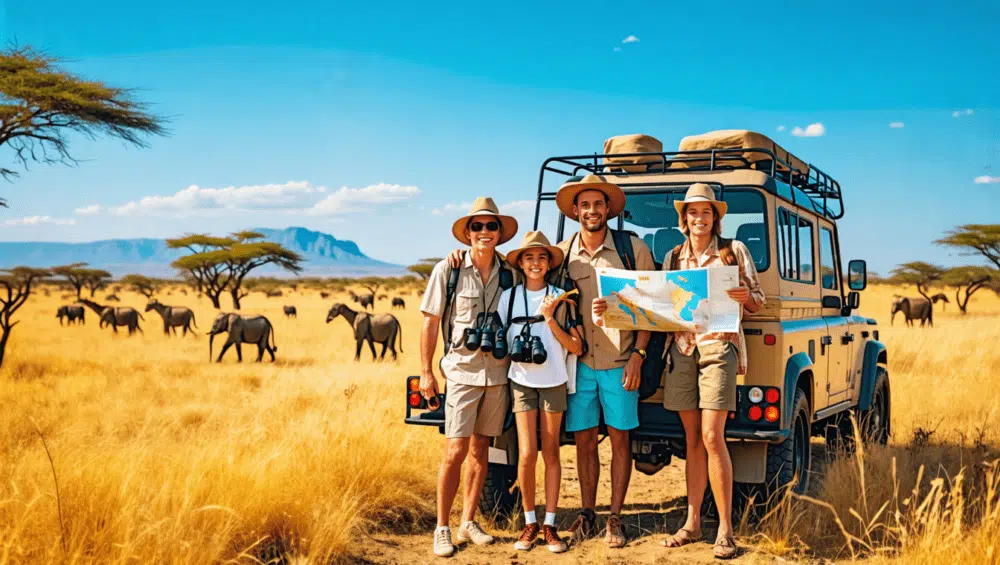
The search for top ethical safari plans is often undermined by the prevalence of “greenwashing.” Because the term “ethical” lacks a universally enforced legal definition, operators frequently adopt the label to signify nothing more than basic regulatory compliance. To find true value, one must look beyond marketing collateral and toward operational outcomes. An ethical safari is not defined by the absence of environmental impact, as human presence is inherently disruptive; rather, it is defined by the intentionality of the intervention.
A primary misunderstanding is the belief that ethics are synonymous with seclusion. While private reserves can offer superior conservation outcomes, they can also insulate travelers from the realities of human-wildlife conflict occurring on the borders of these protected areas. Similarly, the focus on charismatic megafauna—lions, elephants, rhinos—often obscures the health of the broader ecosystem. True ethical plans treat the entire biome, including microscopic biodiversity and local human populations, as essential components of the experience.
Furthermore, the risk of oversimplification is significant. Travelers often equate the presence of a “charity donation” component with an ethical plan. However, without transparent longitudinal data, such donations may simply be symbolic measures designed to satisfy consumer guilt. A robust understanding of the subject requires a multi-perspective approach: viewing the safari as a biological transaction, a socioeconomic intervention, and a personal education exercise.
Historical Evolution and the Shift in Conservation Philosophy
The trajectory of the African safari began as a colonial hunting enterprise, transitioned into a mid-century “viewing” model characterized by mass-market photography, and is now grappling with the era of “participatory conservation.” Early models treated land as an inexhaustible resource. As biodiversity loss became recognized as a systemic threat, the philosophy shifted toward “fortress conservation”—fencing off areas to exclude human presence.
Contemporary approaches, however, acknowledge the failure of exclusion. The most resilient ecosystems are those where local communities hold economic agency. Consequently, the gold standard for ethical operations has shifted from purely environmental focus to human-centric ecology. The best plans now integrate community land management, where tourism revenue directly funds the education, healthcare, and infrastructure of the local population, thereby removing the incentive for poaching and landscape degradation.
Mental Models for Evaluating Wildlife Tourism
To discern the quality of a travel itinerary, apply these frameworks:
-
The Agency Ratio: Calculate the percentage of operational control held by local stakeholders versus foreign investors. Higher local agency typically correlates with higher long-term environmental protection.
-
The Disturbance Threshold: A measurement of how much a lodge limits vehicle traffic and visitor volume per hectare. High-volume lodges prioritize turnover; ethical models prioritize the continuity of animal behavior.
-
The Transparency Audit: Does the operator explicitly disclose how their revenue is distributed? A lack of financial transparency regarding community benefit schemes is a primary red flag.
Taxonomy of Safari Models and Stakeholder Trade-offs
| Model Type | Primary Driver | Ethical Strength | Potential Limitation |
| Community-Managed | Land Rights | High local agency | Variable infrastructure quality |
| Private Conservation | Biodiversity/Research | High ecological protection | Risk of elitist isolation |
| National Park Entry | Government Policy | High accessibility | High volume/crowding |
| Mobile-Tented | Low Footprint | Minimal infrastructure | Logistically complex |
When choosing between these, consider the trade-offs. Community-managed zones offer the highest socioeconomic impact but may lack the specialized, high-tier wildlife tracking found in private, research-funded areas.
Analytical Scenarios for Strategic Planning
The High-Integrity Conservation Focus
-
Constraints: Desire for maximum wildlife interaction with zero disruption to animal behavior.
-
Decision Path: Prioritize remote, research-affiliated private reserves in regions with established carbon-negative credentials.
-
Failure Mode: Selecting a high-luxury resort that uses “wildlife viewing” as a backdrop for high-volume dining, which inevitably shifts animal behavior toward human-proximity feeding.
The Socio-Economic Development Focus
-
Constraints: Priority on supporting indigenous populations and cultural sovereignty.
-
Decision Path: Choose conservancies where land lease payments are paid directly to local community trusts rather than centralized government bodies.
-
Failure Mode: Misunderstanding the political structure of the region, which may lead to funds being intercepted by local elites, reinforcing, rather than alleviating, inequality.
Resource Dynamics: The Economics of Ethical Presence
The costs associated with top ethical safari plans are high because they account for externalities that budget operators ignore.
-
Direct Costs: High daily rates reflect the funding needed for anti-poaching units, ecological monitoring, and fair-wage labor practices.
-
Indirect Costs: The “time cost” of planning. Researching an operator’s tenure, community impact reports, and ecological management records requires significant cognitive investment.
-
Cost Range Estimator:
-
Foundational Sustainability ($400-$700/day): Basic regulatory compliance; limited community impact.
-
Advanced Ethical Integration ($1,000-$2,000/day): Comprehensive conservation funding; high community engagement.
-
Experimental/Research-Led ($2,500+/day): Direct funding of active scientific research and landscape restoration.
-
Risk Landscape and Systemic Failure Modes
Ethical travel is vulnerable to compounding risks. A primary systemic failure occurs when a safari plan relies solely on tourism revenue for conservation. When global events such as pandemics or regional political instability halt travel, the conservation funding collapses, leading to immediate increases in poaching. The most resilient plans are those that diversify revenue through carbon credits, sustainable agriculture, or educational programming, ensuring that the ecosystem is not solely dependent on a constant stream of foreign visitors.
Governance, Maintenance, and Long-Term Adaptation
A serious approach to safari planning includes a review cycle. Before committing, request the operator’s last three years of impact reports. These should not just contain anecdotes about wildlife, but quantitative data: headcount stability, employment statistics within the local community, and energy consumption metrics.
-
Adjustment Triggers: If an operator fails to provide data on their community benefit distribution upon request, consider it an automatic disqualifier for your selection process.
-
Checklist for Governance:
-
Verification of land ownership tenure.
-
Documentation of employee unionization or equivalent protection.
-
Alignment with international biodiversity standards (e.g., CITES compliance).
-
Common Misconceptions
-
“All-inclusive is inherently extractive”: Not necessarily, provided the supply chain is localized.
-
“Photographic volume is harmless”: Frequent vehicle clustering can stress animals and alter hunting patterns.
-
“Local guides are sufficient”: True ethics requires the integration of local guides with professional conservation scientists.
-
“Wilderness is pristine”: Almost all African wilderness is anthropogenically managed; acknowledging this is key to understanding the necessity of human involvement.
-
“Large-scale lodges are always bad”: If built with sustainable materials and minimal footprint, scale can provide the necessary revenue to protect vast, high-risk territories.
-
“Donation = Impact”: A direct investment in local infrastructure (e.g., wells, schools) is generally superior to a vague “conservation fee.”
Conclusion
The pursuit of top ethical safari plans is essentially an exercise in responsible stewardship. It demands that the traveler transition from a consumer of natural beauty to a participant in its preservation. By rigorously evaluating the agency, transparency, and economic distribution within a safari itinerary, one moves toward a model of engagement that respects the complexity of the landscape. Success is not measured by the number of species sighted, but by the contribution the traveler makes to the sustained resilience of the entire ecosystem.