Boutique Eco Lodge Experiences in America: A Strategic Guide
The contemporary travel landscape is defined by a central, persistent tension: the human desire for deep immersion in pristine environments versus the reality that the act of visitation often degrades the very landscapes being sought. As the hospitality industry struggles to reconcile the demands of luxury with the imperative of environmental restoration, a new model has emerged. These are not merely hotels with low-flow showerheads or towel-reuse policies; they are intentional, place-based operations that integrate ecological stewardship into the architecture, energy, and supply chain of the guest experience.
Navigating this sector requires a significant departure from the standard “booking” mentality. The most high-integrity operations are often small-scale, locally owned, and deeply embedded within their specific bioclimatic regions. They do not exist to serve a generic travel archetype but are built to reflect, protect, and interpret their immediate natural surroundings. For the discerning guest, the task is to discern between facilities that engage in superficial “greenwashing” and those that represent a genuine, structural commitment to regenerative tourism.
This guide provides a rigorous, systems-level analysis of the high-end, small-footprint hospitality sector in the United States. We move past the glossy veneer of lifestyle marketing to interrogate the operational, economic, and ethical frameworks that support, or undermine, these destinations. Our objective is to equip the reader with the diagnostic tools necessary to verify the integrity of their choices, ensuring that their leisure time functions as a support system for ecological health rather than an extractive drain on a fragile ecosystem.
Understanding “boutique eco lodge experiences in America.”
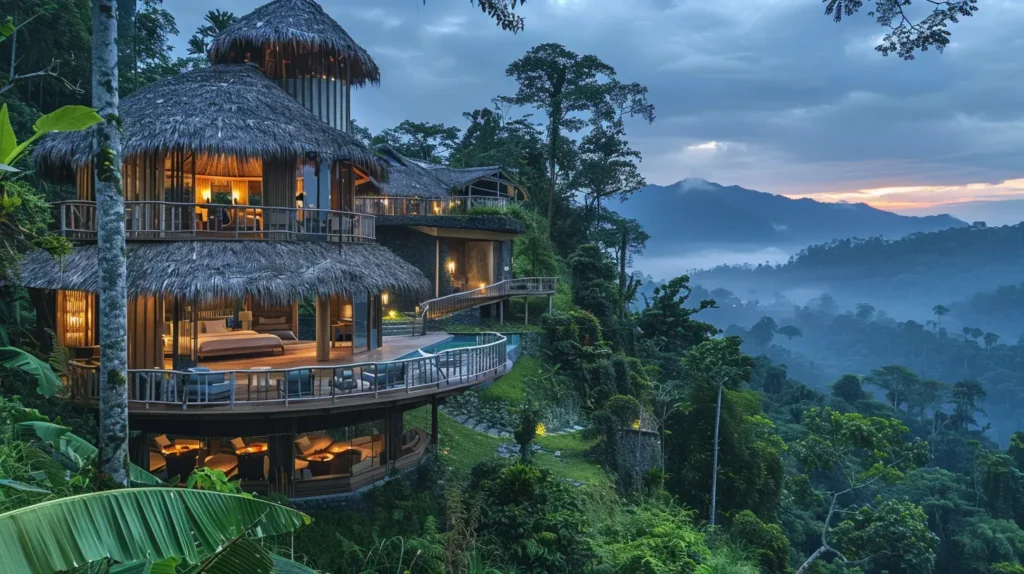
The search for boutique eco lodge experiences America offers is frequently plagued by the absence of a standardized definition for “boutique” or “eco” in the hospitality sector. Travelers are often misled by marketing language that emphasizes “natural aesthetics” while failing to disclose the environmental costs of the property’s construction, power, and logistics. A property might look “natural,” but if it relies on fossil-fuel-intensive transit to move guests to and from its doors, or if it disrupts local hydrology to maintain its manicured appearance, it may be failing its fundamental mandate.
Oversimplification remains the greatest risk to informed selection. We must recognize that the best boutique eco lodge experiences America provides are rarely about convenience or luxury-standard service models. Instead, they are about the quality of the engagement between the facility and the land. Is the property’s presence regenerative? Does it foster local biodiversity? Does it operate with a level of transparency that allows the guest to understand its resource usage? The term “boutique” implies a high degree of personalization, but in the context of sustainability, this should also imply a high degree of accountability to the specific bioregion.
Deep Contextual Background
The evolution of nature-based hospitality in the United States traces a path from the grand, early 20th-century “parkitecture” of the National Parks’ massive, imposing lodges built of native stone and timber to the contemporary, highly refined small-footprint lodge. The early model prioritized the “monumental” experience, often ignoring the ecological footprint of these large structures. By the late 1990s, the “eco-lodge” movement, heavily influenced by international trends in Costa Rica and East Africa, began to challenge the traditional resort paradigm.
Today, this movement has matured. The most successful operators realize that ecological health and financial viability are not mutually exclusive. We are currently in a phase of professionalization where high-performance architectural standards, such as Passive House design and circular economy principles, are increasingly being applied to hospitality. However, the geographic diversity of the U.S., from arid high deserts to dense temperate rainforests, means that no single template exists. The evolution of boutique eco lodge experiences American visitors now encounter is fundamentally a story of adapting global sustainability concepts to local landscape realities.
Conceptual Frameworks and Mental Models
To rigorously evaluate a potential destination, utilize the following analytical frameworks:
-
The Regenerative-Impact Ratio: This assesses whether the property’s presence constitutes a net positive for local biodiversity. An operation that restores native vegetation or creates corridors for wildlife is infinitely more valuable than one that simply “does less harm.”
-
The Economic-Leakage Hierarchy: A measure of how much revenue remains within the local ecosystem. A lodge that sources labor, food, and craft from within a 50-mile radius is fundamentally more sustainable than one that relies on globalized supply chains.
-
The Life-Cycle Stewardship Mindset: This model shifts the focus from the guest’s nightly experience to the full operational history of the building. How was the facility constructed? How is waste processed? What happens when the facility requires a major retrofit?
-
The Adaptive-Access Model: This evaluates how the lodge handles guest transit. High-integrity lodges provide low-impact alternatives for arriving guests, recognizing that personal vehicular travel is often the largest component of an eco-lodging stay’s carbon footprint.
Key Categories and Operational Variations
The following table differentiates between the primary models currently operating within the high-end sustainable travel market.
| Category | Typical Landscape | Primary Operational Driver | Ethical Risk |
| Bioregional Boutique | Wilderness-adjacent | Local ecological restoration | High maintenance cost |
| Adaptive-Reuse | Historic/Agricultural | Embodied carbon reduction | Aesthetic over function |
| Off-Grid High-Tech | Remote/Arid | Energy autonomy/Efficiency | Reliability/Guest comfort |
| Community-Trust Lodge | Working landscape | Social and economic equity | Institutional scaling |
Determining the ideal boutique eco lodge experiences America should offer involves aligning your priorities. If you value biodiversity, prioritize bioregional boutique models. If you prioritize resource efficiency, look toward off-grid high-tech designs.
Real-World Scenarios and Decision Logic
Consider the “Resource-Efficiency Paradox.” A property utilizes expensive, high-tech geothermal heating to maintain an indoor climate that requires constant adjustment. Is this an “eco” experience? The decision logic here requires an interrogation of whether the technology is helping the building mimic the natural climate or merely defy it. If the property’s design relies on heavy active systems rather than passive environmental integration, it may be a failure of design intent.
Another scenario involves “The Isolation Fallacy.” A lodge claims to be off-grid, yet it provides 24/7 high-speed internet and power-hungry appliances for every unit. Does the resource load of the “lifestyle” amenities outweigh the benefits of the off-grid energy source? Assessing these tradeoffs requires the guest to look past the marketing slogan and evaluate the total energy load of the property, not just its source of electricity.
Planning, Cost, and Resource Dynamics
The economic management of truly sustainable lodging is frequently misunderstood.
-
Fixed vs. Variable Costs: Genuine boutique eco lodge experiences America enthusiasts often pay higher rates not for “luxury” in the hotel sense, but for the fixed costs associated with onsite waste management, energy systems, and high-quality local staff.
-
The Opportunity Cost of Scale: By choosing a property with a limited number of units, you are directly paying for the reduction in environmental pressure. This scarcity of supply is a fundamental component of the pricing structure.
-
Resource Variability: Be prepared for a higher degree of interaction with the natural environment than one expects in a conventional resort. This might involve seasonal closures or shifts in service levels based on water availability or fire risk, which are indicators of responsible, landscape-conscious management.
Tools, Strategies, and Support Systems
-
Transparency Documentation: Request the property’s environmental impact report. A facility that tracks and publishes its energy, water, and waste data is, by definition, more accountable.
-
Local NGO Vetting: Contact regional environmental or conservation organizations. They often have the most accurate, unfiltered view of a lodge’s operational integrity and its relationship with the local community.
-
Architectural Assessment: Review the lodge’s design principles. Does it integrate with the landscape (passive cooling/heating, native materials) or impose upon it (HVAC-dependent, imported steel/glass)?
-
Operational Maturity Analysis: Focus on lodges that have been in operation for at least three to five years. This ensures the systems—especially waste management and water treatment have been stress-tested through multiple seasonal cycles.
Risk Landscape and Failure Modes
The primary systemic threat is “Audit Capture,” where an operator becomes skilled at passing environmental checklists without actually changing their fundamental resource usage. Another risk is “Institutional Stagnation,” where an operator begins with a strong ecological focus but gradually degrades their standards to accommodate market pressures or increased volume. The most compounding risk is “Traveler Inconsistency,” where guests demand high-luxury, resource-intensive experiences while simultaneously expecting the property to be “sustainable.” This dissonance creates a marketplace incentive for lodges to provide “the look” of sustainability without the substance.
Governance, Maintenance, and Long-Term Adaptation
Authentic, sustainable hospitality is a state of active maintenance.
-
Iterative Review Cycles: A top-tier lodge should perform post-seasonal reviews, adjusting its operational protocols based on the observed health of the local landscape.
-
Adjustment Triggers: If a lodge notices that their guest volume is causing soil compaction or disturbance to local wildlife corridors, they should have pre-defined, automated triggers that reduce access or reroute traffic.
-
Layered Checklist: Governance must be multi-tiered, covering energy efficiency, waste management, staff labor equity, and biodiversity monitoring.
Measurement, Tracking, and Evaluation
Evaluation must move beyond “satisfaction” to focus on system-level performance indicators:
-
Leading Indicators: The lodge’s documentation regarding its energy consumption per guest, water recycling rates, and local sourcing percentages.
-
Lagging Indicators: Evidence of the property’s impact on local habitat connectivity and biodiversity counts over a multi-year timeframe.
-
Documentation Examples: Public-facing sustainability audits, third-party energy efficiency certifications (beyond simple marketing badges), and granular reports on community investment projects.
Common Misconceptions and Oversimplifications
-
Myth: “If it’s remote, it’s eco-friendly.”
Correction: A remote lodge can have a massive carbon footprint due to supply chain and guest transit requirements. -
Myth: “Small equals sustainable.”
Correction: Small properties can be inefficient, while large, well-designed developments can potentially provide highly efficient resource management through shared infrastructure. -
Myth: “The design of the building is secondary to the activities offered.”
Correction: In a truly sustainable operation, the architecture is the activity that facilitates an understanding of the site. -
Myth: “I am just one guest; my impact is negligible.”
Correction: Every guest interaction is a data point that signals to the operator what the market prioritizes.
Conclusion
Mastering the selection of boutique eco lodge experiences in America requires a shift in how we approach the role of the traveler. It necessitates moving away from the paradigm of the “consumer” toward that of a “steward.” By prioritizing transparency, ecological integration, and local stewardship, one ensures that their presence in a wild landscape is a constructive force. There is no simple, static answer; identifying the best lodges is an ongoing process of research, engagement, and critical inquiry. When properly executed, however, the result is a travel experience that transcends leisure, becoming an opportunity to bear witness to, and participate in, the long-term restoration of the American landscape.