Compare Ethical Safari Operators: A Professional Performance Guide
The decision to engage with the natural world as a guest carries significant weight. Travelers often overlook this weight in their pursuit of leisure. When travel becomes an active engagement with fragile ecosystems rather than a passive diversion, the potential for positive impact increases. However, dense marketing rhetoric frequently obscures the modern safari industry. In this environment, providers apply the term “ethical” indiscriminately. These lodges, tours, and experiences vary wildly in their actual commitment to conservation and socio-economic integrity.
Travelers benefit uniquely from wildlife-centered experiences. Beyond immediate value, these journeys instill a lifelong appreciation for global biodiversity in younger generations. Yet, identifying operators who genuinely integrate conservation into their core business model remains a substantial barrier. Navigating this space requires more than a casual glance at a website. It demands a critical examination of operational transparency, long-term conservation funding, and the nuances of human-wildlife dynamics.
Understanding “compare ethical safari operators.”
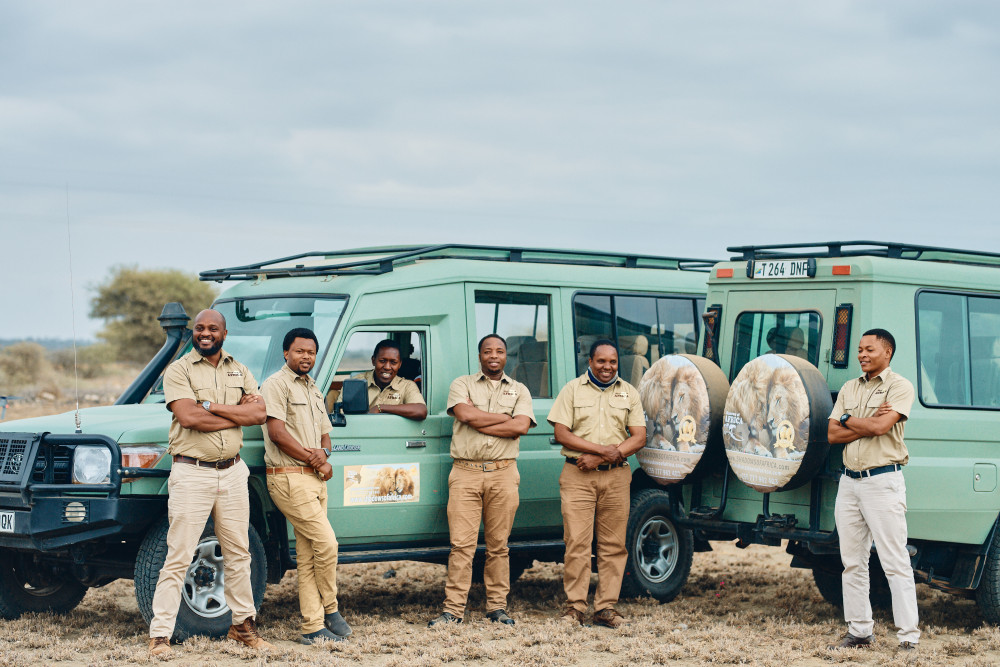
The process to compare ethical safari operators often faces obstacles due to the inherent ambiguity of “sustainability” in the tourism market. An operation might claim the “ethical” label based on a single, visible feature, such as eliminating single-use plastics or donating to a local charity. However, such claims often ignore the business’s operational energy intensity, impact on animal behavior, or its long-term socio-economic relationship with the host community. This narrow focus creates a systemic risk that obscures a business’s broader environmental and social performance.
The primary risk of oversimplification involves travelers prioritizing high-visibility amenities. They may ignore the primary drivers of ecological disruption, such as habitat fragmentation, wildlife habituation, and the creation of exclusionary land-use models. True leadership in this sector involves a hierarchical approach. Operators should prioritize non-intrusive wildlife observation and habitat integrity first. They must then evaluate their socio-economic footprint and the transparency of their conservation funding. The most robust operators provide clear, third-party verified disclosures of these performance layers instead of relying on a singular, vague badge.
Deep Contextual Background
Historically, the wildlife tourism industry relied on a “fortress conservation” paradigm. This model sought to preserve biodiversity by sequestering land from human habitation. This often alienated local indigenous populations and created insular, poorly managed ecosystems. As the limitations of this top-down approach became clear, the sector began a necessary transition toward community-based natural resource management.
This systemic evolution has reached a point where the most successful conservation initiatives remain inextricably linked to the economic viability of tourism. The current challenge involves maintaining this economic engine while correcting historical imbalances of power and access. Travelers to these regions are no longer just passive observers. They are active participants in a fragile social-ecological system. Understanding this historical context is essential for recognizing why the most effective operators succeed. These operators maintain transparent, long-term partnerships with the people who have lived alongside these wildlife populations for generations.
Conceptual Frameworks and Mental Models
To assess the integrity of safari operators with the sophistication required for long-term ecological outcomes, one should employ structured mental models:
-
The Triple Bottom Line Framework: This evaluates an operation based on three equal metrics: environmental conservation, socio-economic community benefit, and organizational transparency. If one pillar is neglected, the entire system is unstable.
-
The Social License to Operate: This model measures whether an operator is genuinely welcomed and supported by the local community. A lodge that operates in isolation from its surrounding villages or worse, at their expense, lacks the foundation necessary for long-term sustainability.
-
The Disturbance-Threshold Model: This acknowledges that every human presence has an impact. High-integrity planning relies on the principle of minimal disturbance, setting clear boundaries for how close to approach animals, how many vehicles can be present, and how long sightings can last.
-
The Educational Agency Model: Rather than teaching travelers that animals are curiosities to be viewed, this framework focuses on fostering agency, helping them understand the complex role wildlife plays in local cultures, economies, and planetary health.
Key Categories and Operational Variations
Safari operations vary by their core philosophy and the specific ecological or social pressures of their region. Understanding these variations helps when one seeks to compare ethical safari operators effectively.
| Category | Primary Strategic Focus | Primary Trade-off |
| Community-Owned Conservancy | Long-term land lease & revenue sharing | Lower luxury amenities; more “rugged.” |
| Conservation-Science Focused Lodge | Field research participation & funding | Highly educational; less “leisure” time |
| Regenerative Estate | Active soil/habitat restoration | Requires a large footprint; expensive |
| Eco-Boutique Lodge | Minimal operational footprint | Often smaller scale, high demand |
| Mobile Eco-Safari | Minimal long-term environmental trace | High logistical complexity |
Decision logic for selecting these categories should be driven by the traveler’s specific educational goals and the biophysical context of the region. A conservation-science lodge is ideal for those interested in biology, while a community-owned conservancy provides a richer cultural immersion.
Real-World Scenarios and Decision Logic
Consider the apex predator protection scenario. A lodge may boast about its “exclusive” big cat sightings. An ethical evaluation requires asking: how does the lodge contribute to the mitigation of human-wildlife conflict? If the surrounding communities lose livestock to these predators, is there a formal, transparent compensation scheme? A failure mode here is a lodge that profits from predator sightings while its neighbors bear the cost of their presence.
Another scenario involves water-stressed habitat management. In arid landscapes, water extraction is a critical point of tension. Does the lodge recycle greywater? Is their extraction rate monitored and disclosed? The second-order effect of failing to evaluate this is the unintentional depletion of local aquifers, which directly impacts the community’s primary source of clean water.
Planning, Cost, and Resource Dynamics
Investment in high-performance, ethical safari operations is often reflected in higher prices, creating an apparent, though often deceptive, cost disadvantage.
-
Capital Intensity: The best options require higher upfront investment for habitat protection, fair staff wages, and sophisticated, low-impact infrastructure.
-
Economic Leakage: Travelers must look for operators that minimize “leakage”—the tendency for tourism revenue to flow out of the local economy to foreign-owned parent companies.
-
The “Ethics Premium”: Travelers often pay a premium for verified performance data; however, this is frequently offset by the lower total cost of externalized environmental and social damage compared to “standard” operators.
Tools, Strategies, and Support Systems
-
Independent Impact Audits: Look for operators that share third-party, publicly verifiable reports on their community and conservation contributions.
-
Staff Tenure and Training: High turnover in local staff is a strong indicator of an unsustainable, exploitative social environment.
-
Formal Partnership Disclosures: Seek lodges that can name their specific community partners or the village councils they work with.
-
Wildlife Behavior Monitoring: Reputable lodges will have clear, documented policies regarding how they handle sightings, particularly when animals are showing signs of stress.
-
Supply Chain Traceability: Are food and materials sourced locally? This is both a sustainability metric and a community economic benefit.
-
Scientific Advisory Boards: Does the operation have a formal, public-facing connection to recognized ecological researchers?
Risk Landscape and Failure Modes
The primary systemic threat is Greenwashing, where the veneer of sustainability (reusable bottles, minimal lighting) obscures a lack of deep investment in community and conservation. A secondary, compounding risk is Habituation, where tours inadvertently push vehicles closer or stay longer to ensure “the action,” leading to animals losing their natural fear of humans, which often precedes poaching incidents.
Furthermore, Institutional Failure occurs when an operator is owned by a remote entity with no accountability to local stakeholders. The most resilient travel plans are those that ensure the economic benefits remain in the hands of those who live on the land.
Governance, Maintenance, and Long-Term Adaptation
Ethics is a dynamic state requiring constant calibration. Governance structures must be designed to adapt to new performance standards and shifting ecological realities.
-
Review Cycles: Annual performance reviews of the lodge’s conservation and community impact should be standard.
-
Adjustment Triggers: A clear protocol for when operational practices must be changed (e.g., stopping vehicle access to a specific area if erosion or animal stress is observed).
-
Layered Checklist: Governance should include periodic “integrity sanity checks” regarding supply chain shifts and community feedback loops, ensuring that the lodge is not introducing unintended social friction.
Measurement, Tracking, and Evaluation
-
Leading Indicators: The ratio of local vs. foreign staff in management positions; the percentage of procurement sourced from within 50 miles; and clear and public community employment statistics.
-
Lagging Indicators: The sustained success of local species monitoring programs and the measurable growth of local businesses that supply the lodge.
-
Examples of Evidence: Annual social impact reports, audited environmental performance documentation, and testimonials from local community partners rather than just other travelers.
Common Misconceptions and Oversimplifications
-
Myth: “All-inclusive” resorts are automatically sustainable.
Correction: They are often the most extractive; decentralization and local procurement often lead to higher community benefit. -
Myth: Any lodge with “Eco” in the title is ethical.
Correction: It is an unregulated term; always dig into the governance structure and community partnerships. -
Myth: Sightings should be guaranteed.
Correction: Nature is dynamic; prioritizing understanding natural behavior over “seeing” leads to a deeper, more ethical experience. -
Myth: “Carbon-neutral” flights make a safari ethical.
Correction: Offsetting is a peripheral aid; the focus must remain on the absolute reduction of environmental impact at the destination. -
Myth: Animals in “sanctuaries” are safe.
>Correction: Many are only safe if the tourism revenue provides an effective, locally-supported anti-poaching shield; otherwise, they are often commercial traps. -
Myth: Touching animals in “sanctuaries” is okay if it’s for charity.
Correction: In almost every case, such interaction is for commercial gain and negatively affects the animal’s welfare.
Conclusion
The transition of the wildlife tourism industry toward a performance-based, ethical model is an inevitable systemic necessity. For those seeking to compare ethical safari operators, the process of evaluation must be disciplined, data-driven, and fundamentally skeptical of simplified marketing. By focusing on the hierarchical reduction of intrusion, the circular management of resources, and the transparency of impact disclosures, travelers can support a new generation of tourism that serves as a beacon of ecological resilience. Ultimately, these operations should be measured not by their labels, but by the depth of their integration into a regenerative, low-carbon, and community-centric future.