How to Manage Wildlife Harassment Risks: A Professional’s Guide
The presence of humans within wild environments inherently alters the behavioral baseline of non-human species. From the fleeting presence of a hiker to the organized, multi-vehicle logistics of professional tourism, every encounter generates a measurable, if often ignored, physiological response in wildlife. When these interactions cross the threshold from observation to disruption, they constitute harassment, an issue that, while legally defined in many jurisdictions, remains a complex sociological and ecological phenomenon that demands nuanced management.
The modern challenge lies in the rapid democratization of access to wild places. As the boundary between urban centers and remaining wilderness shrinks, the frequency of human-wildlife encounters has surged. This creates a critical tension: we are compelled to facilitate wildlife-centered education to foster conservation support, yet this same access frequently precipitates the very degradation we aim to mitigate. Managing this relationship requires a fundamental departure from passive avoidance toward a structured, proactive operational discipline.
This analysis deconstructs the mechanisms of anthropogenic disturbance and offers a comprehensive guide on how to manage wildlife harassment risks with precision. By examining the intersection of ethology, spatial planning, and behavioral psychology, we provide a reference for those responsible for land management, tourism operations, or individual outdoor stewardship. The goal is to establish a framework where human engagement with nature occurs without compromising the welfare or natural autonomy of the species encountered.
Understanding “how to manage wildlife harassment risks.”
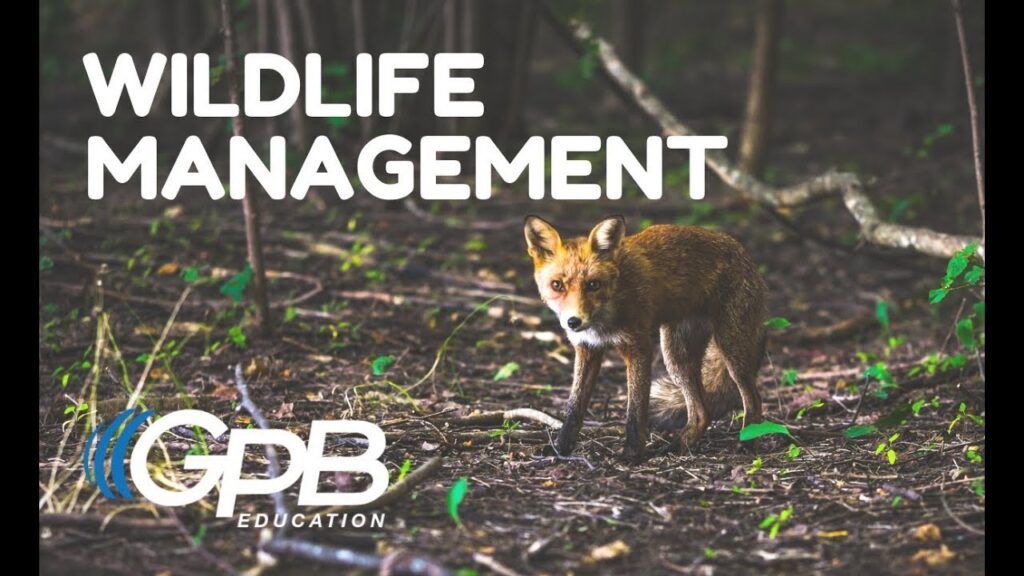
The core difficulty in addressing this issue is that “harassment” is often subjective in the public eye, yet objective in physiological terms. A common misunderstanding is that if an animal does not display overt “fight-or-flight” behavior, it is experiencing no distress. In reality, many species exhibit a “freeze” response or simply tolerate human presence while their heart rate, cortisol levels, and metabolic expenditure skyrocket. Learning how to manage wildlife harassment risks begins with the recognition that behavior is not always a proxy for health.
The risk of oversimplification is profound. When land managers or tour operators treat wildlife as static objects to be “seen,” they ignore the behavioral ecology of the species. Harassment happens on a continuum: at one end is minor spatial displacement; at the other is the chronic, long-term degradation of a population’s reproductive success or survival. Rigorous management must account for individual variation in boldness, seasonal resource requirements, and the compounding effects of cumulative visitation. True management does not merely react to overt acts of cruelty; it proactively controls the environment of the encounter to ensure that human presence remains within the species’ tolerable limit.
Deep Contextual Background
Historically, the regulation of human-wildlife interaction was reactive. Legislative frameworks were built upon the protection of individuals from direct harm, such as poaching or deliberate trauma, while the subtle, chronic impacts of “non-consumptive” recreation were overlooked. The growth of the global “eco-tourism” industry in the late 20th century transformed these subtle impacts into massive systemic drivers of change. Areas that once saw minimal traffic began to host hundreds of daily visitors, all seeking the same “authentic” encounter.
This evolution necessitated a transition from individual ethics to systemic policy. As we understand more about animal cognition, the concept of harassment has expanded. We now recognize that the mere act of crowding a social animal or interrupting a predator during a hunt is a form of disruption that carries high evolutionary costs. Today’s management landscape is moving toward a more scientific, data-centric model, where spatial zoning and temporary closures are utilized as primary tools to balance human access with biological necessity.
Conceptual Frameworks and Mental Models
Navigating the complexity of human-wildlife interaction requires a rigorous mental architecture:
-
The Tolerance Threshold Model: This framework recognizes that every species has a limit of stimulation. Once human activity exceeds this threshold, the animal’s survival strategy shifts from “foraging” or “mating” to “vigilance” and “escape.”
-
The Cumulative Impact Framework: This looks at the total burden of harassment over time. A single visit is negligible; 365 days of visitation, however, creates an artificial and often unsustainable stress profile for an entire population.
-
The Disturbance-Gradient Map: This model visualizes the zone of influence around human infrastructure. By understanding the “effective radius” of human impact, managers can create buffers that allow for species movement without interference.
-
The Behavioral Agency Model: This perspective shifts the focus from the human observer’s desire to the animal’s freedom of choice. If an animal cannot move away from an observer, the encounter is inherently coercive, regardless of the human’s intentions.
Key Categories and Operational Variations
Management approaches depend on the specific nature of the interaction and the sensitivity of the species involved.
| Category | Operational Focus | Primary Trade-off |
| Fixed Zoning | Permanent spatial exclusion | Rigid; may not follow wildlife movement |
| Dynamic Closures | Seasonal access based on behavior | High logistical cost; complex communication |
| Guided Presence | Certified, supervised interaction | Expensive; requires high-level training |
| Observation Blinds | Passive, non-intrusive viewing | Reduces engagement; limits capacity |
| Technology-Enabled | Remote/Camera trap monitoring | Lacks the “human connection” element |
Developing strategies for how to manage wildlife harassment risks involves matching the intensity of the management approach to the biological sensitivity of the target species and the predictability of their location.
Real-World Scenarios and Decision Logic
Consider the nesting raptor scenario. The constraint is the immediate threat of nest abandonment if the parents are spooked. The decision point occurs when a photographer discovers a nest site. The protocol must be a mandatory, non-negotiable buffer zone. A failure mode here is “selective compliance,” where some observers are allowed closer than others. The second-order effect of this is the training of the wildlife to tolerate the presence of the photographer, making the nest more visible and vulnerable to predators.
In the large mammal feeding scenario, the issue is the learned association between human presence and food. The constraint is the potential for the animal to become aggressive or malnourished through the consumption of human-grade calories. Managing this requires strict, zero-tolerance enforcement of “no-feeding” policies and the rapid public shaming of violators.
Planning, Cost, and Resource Dynamics
The economic reality of wildlife management requires a shift in how we value both the resource and the management process.
-
Direct Costs: Professional signage, remote monitoring infrastructure, and enforcement personnel represent the baseline investment.
-
Opportunity Cost: Choosing to limit visitor access to specific “hotspots” results in immediate revenue loss but prevents the long-term degradation of the site’s primary attraction.
-
Administrative Variability: Costs vary wildly depending on the remoteness of the site and the complexity of the communication required to ensure visitor compliance.
| Management Tier | Complexity Level | Annual Resource Intensity |
| Basic (Signage/Education) | Low | Low |
| Moderate (Zoning/Patrolling) | Moderate | Moderate |
| High (Dynamic/Research-Linked) | High | Significant |
Tools, Strategies, and Support Systems
-
Acoustic and Visual Buffers: Using natural topography to screen human presence from sensitive wildlife locations.
-
Behavior-Based Closure Protocols: Systems that automatically trigger area closures during mating, birthing, or migratory staging periods.
-
Citizen Science Monitoring: Empowering visitors to record and report harassment incidents, effectively increasing the “eyes on the ground.”
-
Enforcement and Compliance Tech: Geofencing alerts for areas where wildlife presence is high to prevent unauthorized entry.
-
Standardized Visitor Briefings: Mandatory training that forces visitors to acknowledge the behavioral codes of the site before entry.
Risk Landscape and Failure Modes
The primary systemic threat is Cumulative Stress Decay. This occurs when each visitor assumes their impact is negligible, ignoring the reality that their presence is one of a hundred that day. Another compounding risk is Enforcement Atrophy, where the rules of conduct become “suggestions” as staff turnover increases or oversight decreases.
Additionally, Information Spillover is a critical failure mode in the digital age. The rapid sharing of precise location data on social media turns a manageable site into a focal point for thousands of visitors, completely overwhelming the site’s carrying capacity. Learning how to manage wildlife harassment risks involves actively counteracting this digital-physical imbalance.
Governance, Maintenance, and Long-Term Adaptation
Ethical presence in the wilderness is a dynamic state requiring constant recalibration. Governance structures must be designed to adapt to new scientific findings and local environmental shifts.
-
Adaptive Review Cycles: Every management plan should undergo a rigorous review every two years to account for changes in wildlife population dynamics.
-
Adjustment Triggers: If biological indicators such as increased flight-initiation distances are observed, the management plan should trigger an automatic tightening of access protocols.
-
Layered Governance Checklist: Oversight must include scientific experts, local land managers, and stakeholders to ensure that policies remain grounded in ecological, not just economic, reality.
Measurement, Tracking, and Evaluation
Evaluation must move beyond simple “visitor count” metrics to focus on wildlife-centric indicators.
-
Leading Indicators: Changes in flight-initiation distance (the distance at which an animal begins to flee); reduced usage of preferred foraging patches near human trails.
-
Lagging Indicators: Long-term reproductive output; shifts in home-range size; changes in the health and body condition of the target populations.
-
Documentation Examples: Annual disturbance logs, independent behavioral audits, and public-facing reports on site-specific wildlife health.
Common Misconceptions and Oversimplifications
-
Myth: “If the animal approaches me, it’s fine.”
Correction: Often, this is a sign of habituation, a dangerous condition where the animal has lost its natural caution, increasing the risk of both human injury and animal death. -
Myth: Photography isn’t harassment.
Correction: Intense, sustained proximity for the perfect shot is a significant form of behavioral intrusion that causes measurable, documented stress. -
Myth: My visit to one park doesn’t matter.
Correction: The cumulative effect of millions of “one visits” is the primary driver of wildlife-stress landscapes. -
Myth: Wildlife will just move to the next forest.
Correction: Animals often hold tightly to specific, resource-rich territories; displacing them forces them into sub-optimal habitats, reducing their survival prospects. -
Myth: We can “train” wildlife to coexist.
Correction: Coexistence is a partnership, not a subjugation; true coexistence requires the human to adapt their behavior, not the animal.
Conclusion
The commitment to understanding how to manage wildlife harassment risks is a vital, non-negotiable requirement for the modern era of outdoor recreation. It demands that we transition from a mindset of absolute human entitlement to a posture of conditional, respectful guest status. By prioritizing behavioral autonomy, embracing dynamic management strategies, and consistently applying scientific rigor, we ensure that our engagement with wild places remains sustainable. The objective is to maintain the integrity of these environments, not just for the benefit of our experience, but for the inherent, independent survival of the species that reside there.