How to Reduce Safari Trip Costs: A Strategic Performance Guide
The economics of African wildlife tourism are often opaque. High-end safari offerings are frequently marketed as monolithic, all-inclusive experiences. This creates the impression that participation requires an exorbitant, non-negotiable financial commitment. The industry infrastructure reinforces this perception. It prioritizes seamlessness and luxury, bundling accommodation, transport, and guide services. These premium packages often insulate travelers from the actual cost structure of the destination.
True financial agility requires a departure from these pre-packaged models. To identify genuine efficiencies, one must interrogate the underlying components. Factors such as logistics, land-use fees, and seasonal demand fluctuations aggregate to create the total price. A mature approach to planning recognizes that price is not a static indicator of quality. Instead, it is a variable function of timing, regional competition, and the specific conservation-fee architecture of individual parks.
This article provides a rigorous, analytical architecture for navigating these financial complexities. We dismantle the performative elements of high-cost travel. We establish a hierarchy of evidence-based planning. By doing so, we move toward a model of exploration that is fiscally sound, operationally transparent, and structurally defensible. The goal is to provide a reference for identifying high-integrity, cost-effective options.
Understanding “how to reduce safari trip costs.”
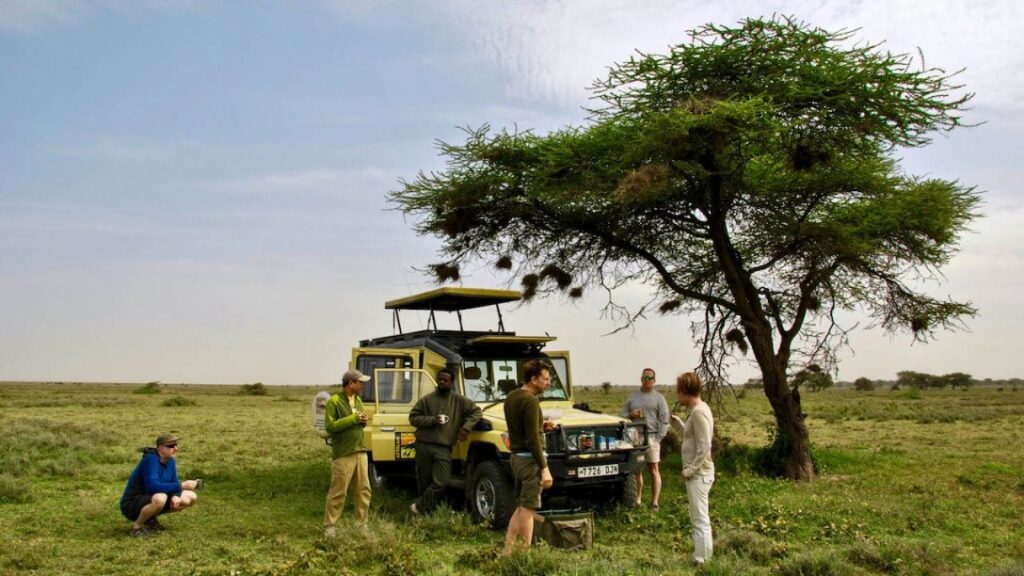
The process of how to reduce safari trip costs is often impeded by the ambiguity of “luxury” versus “necessity.” Often, operators market an experience as a requirement. This leads travelers to believe that anything less than the most expensive offering is a compromise in quality. This narrow focus is a systemic risk. It obscures the broader economic performance of a well-planned itinerary. Many rewarding wildlife experiences occur in regions that demand more logistical planning. These regions often offer lower entry costs than widely marketed hotspots.
The primary risk of oversimplification is that travelers may prioritize “inclusive” packages. These packages often inflate costs by bundling services that are unnecessary. True leadership in this sector involves a hierarchical approach. First, prioritize park entry and conservation fees that facilitate real-world impact. Second, evaluate the logistics of regional transit. Finally, consider accommodation that aligns with your tolerance for rugged versus refined environments. Robust planning involves direct interaction with local service providers. It also requires an understanding of regional seasonality, rather than relying on a singular, vague agency quote.
Deep Contextual Background
Historically, the wildlife tourism industry relied on a “fortress conservation” paradigm. This model favored exclusive, high-barrier access. It sought to preserve biodiversity by sequestering land from the public. This approach created an environment where exclusivity became a surrogate for quality. As the limitations of this top-down approach became clear, the sector began a transition toward more diverse, community-based models.
This systemic evolution has reached a critical point. The most successful conservation initiatives are now inextricably linked to the economic viability of tourism. The challenge today is to maintain this economic engine. Simultaneously, we must correct historical imbalances of power and access. Travelers to these regions are no longer just passive observers. They are active participants in a fragile social-ecological system. Understanding this historical context is essential. It explains why the most effective operators are those who maintain transparent, long-term partnerships with local populations. These operators prioritize community integration over luxury isolation.
Conceptual Frameworks and Mental Models
To assess the financial integrity of safari planning, one should employ structured mental models:
-
The Seasonal Elasticity Model: This framework assesses how pricing fluctuates based on migratory patterns and climate. Traveling during “shoulder seasons,s” the transitional periods between wet and dry, is the most potent tool for achieving efficiency.
-
The Logistical Efficiency Model: This measures the impact of transit on cost. Moving between multiple, distant parks significantly increases charter flight requirements. A plan focused on a single, high-density ecological area minimizes these compounding logistical costs.
-
The Conservation Fee Transparency Framework: This recognizes that park entry fees are fixed. However, lodge overhead and administrative markups are highly variable. Direct-to-provider interaction reduces the friction of middleman margins.
-
The Minimalist Necessity Model: This evaluates whether an amen, ty—such as a swimming pool or private butler, contributes to the objective of wildlife observation. Removing non-essential comforts reduces direct costs without diminishing the ecological experience.
Key Categories and Operational Variations
Safari operations vary by their core philosophy and the specific ecological pressures of their region. Understanding these variations helps when one explores how to reduce safari trip costs effectively.
| Category | Primary Strategic Focus | Primary Trade-off |
| National Park Camping | Maximum conservation access | High logistical requirement |
| Conservancy Self-Drive | Personal autonomy & flexibility | Risk of navigation & wildlife error |
| Community-Led Mid-Range | Local immersion & equity | Lower luxury standard |
| Scientific-Research Lodge | Education & observation | Highly technical environment |
| Group-Joined Transit | Shared logistics/charters | Reduced schedule flexibility |
Decision logic for selecting these categories should be driven by the traveler’s specific educational goals and the biophysical context of the region. A scientific research lodge is ideal for those interested in biology, while a community-owned conservancy provides a richer cultural immersion at a different price point.
Real-World Scenarios and Decision Logic
Consider the multi-location transit scenario. A common failure mode is attempting to cover three distant national parks in one week. The constraint is the reliance on private air charters to bridge the gap. A decision point arises: can the itinerary be adjusted to focus on one ecosystem, allowing for land-based transport? This shift alone can reduce transit costs by up to 50%. The second-order effect of this change is a deeper engagement with the specific flora and fauna of a single area, rather than a cursory overview of three.
Another scenario involves peak-season crowding. The primary hurdle is the premium pricing charged by lodges in July and August. Does the program require the presence of large-scale migration, or is the goal general wildlife observation? A shift to late October or early November significantly reduces accommodation overheads while often providing better, less-crowded sightings.
Planning, Cost, and Resource Dynamics
Investment in high-performance, cost-effective safari planning is often reflected in the time spent in the planning phase, creating an apparent, though often deceptive, effort disadvantage.
-
Capital Intensity: The best options require higher investment in time for research, logistics planning, and local booking.
-
Economic Leakage: Travelers must look for operators that minimize “leakage,” the tendency for tourism revenue to flow out of the local economy to foreign-owned parent companies, which often results in a better price-to-service ratio.
-
The “Efficiency Premium”: Travelers often pay a premium for convenience-first planning; however, this is frequently offset by the lower total cost of direct bookings and focused itineraries.
Tools, Strategies, and Support Systems
-
Independent Booking Engines: Engaging with direct park services or local community platforms instead of global tourism conglomerates.
-
Local Guides’ Network: Directly contracting independent guide services who have deep knowledge of the park dynamics, often for a fraction of the agency cost.
-
Formal Partnership Disclosures: Seek lodges that can name their specific community partners or the village councils they work with, ensuring transparency in fee allocation.
-
Wildlife Behavior Tracking: Utilizing regional ecological alerts to plan trips when wildlife is naturally concentrated, reducing the fuel-intensive search time.
-
Supply Chain Traceability: Are food and materials sourced locally? This is both a sustainability metric and a community economic benefit, which helps lower the import-related overheads.
-
Scientific Advisory Boards: Does the operation have a formal, public-facing connection to recognized ecological researchers? This often indicates an operation that prioritizes core activity over secondary amenities.
Risk Landscape and Failure Modes
The primary systemic threat is Market Fragmentation, where the sheer number of intermediaries increases costs without adding functional value. A secondary, compounding risk is Habituation, where tours inadvertently push vehicles closer to ensure the “action” for the sake of the high price paid, leading to animals losing their natural fear of humans, which often precedes poaching incidents.
Furthermore, Logistical Misalignment occurs when an itinerary is built on unrealistic assumptions about travel time or regional terrain. The most resilient plans are those that ensure the economic benefits remain in the hands of those who live on the land, and that the logistics are designed for the actual reality of the region, not the marketing brochures.
Governance, Maintenance, and Long-Term Adaptation
Economics is a dynamic state requiring constant calibration. Planning structures must be designed to adapt to new performance standards and shifting ecological realities.
-
Review Cycles: Annual performance reviews of the lodge’s conservation and community impact—and the corresponding costs—should be standard.
-
Adjustment Triggers: A clear protocol for when operational practices must be changed (e.g., stopping vehicle access if fuel prices or climate stressors make certain transit modes unviable).
-
Layered Checklist: Governance should include periodic “integrity sanity checks” regarding supply chain shifts and community feedback loops, ensuring that the planning is not introducing unintended social friction.
Measurement, Tracking, and Evaluation
-
Leading Indicators: The ratio of local vs. foreign staff in management positions; the percentage of procurement sourced from within 50 miles; and clear and public community employment statistics.
-
Lagging Indicators: The sustained success of local species monitoring programs and the measurable growth of local businesses that supply the lodge.
-
Examples of Evidence: Annual social impact reports, audited environmental performance documentation, and testimonials from local community partners rather than just other travelers.
Common Misconceptions and Oversimplifications
-
Myth: “All-inclusive” resorts are automatically the best value.
Correction: They are often the most extractive; decentralization and local procurement often lead to higher community benefit and lower base costs. -
Myth: Any lodge with “Eco” in the title is ethical or cost-effective.
Correction: It is an unregulated term; always dig into the governance structure and community partnerships. -
Myth: Sightings should be guaranteed through high-priced “exclusive” zones.
Correction: Nature is dynamic; prioritizing understanding natural behavior over “seeing” leads to a deeper, more cost-effective experience. -
Myth: “Carbon-neutral” flights make a safari efficient.
Correction: Offsetting is a peripheral aid; the focus must remain on the absolute reduction of logistics costs and environmental footprint at the destination. -
Myth: Animals in “sanctuaries” are cheaper.
Correction: Many are only safe if the tourism revenue provides an effective, locally-supported anti-poaching shield; otherwise, they are often commercial traps. -
Myth: Touching animals in “sanctuaries” is okay if it’s for charity.
Correction: In almost every case, such interaction is for commercial gain and negatively affects the animal’s welfare, often driving up prices without increasing conservation value.
Conclusion
The transition of the wildlife tourism industry toward a performance-based, fiscally sound model is an inevitable systemic necessity. For those seeking how to reduce safari trip costs, the process of evaluation must be disciplined, data-driven, and fundamentally skeptical of simplified marketing. By focusing on the hierarchical reduction of intrusion, the circular management of resources, and the transparency of impact disclosures, travelers can support a new generation of tourism that serves as a beacon of ecological and economic resilience. Ultimately, these operations should be measured not by their labels or price points, but by the depth of their integration into a regenerative, low-carbon, and community-centric future.