Common Wildlife Photography Etiquette Mistakes: A Definitive Guide
The pursuit of the definitive wildlife image has transitioned from a niche technical craft into a mass-market obsession, fueled by the democratization of high-resolution optics and the digital feedback loops of social media. This shift, while fostering a greater public awareness of nature, has simultaneously introduced significant systemic pressure upon the species being documented. The central tension lies in the photographer’s desire for the “intimate” portrait versus the animal’s fundamental requirement for biological autonomy. When the quest for a compelling frame overrides the safety and behavioral integrity of the subject, the practice crosses from documentation into exploitation.
Understanding this dynamic is not merely an exercise in personal morality; it is a critical component of conservation biology. Every interaction, whether intentional or accidental, carries a physiological cost for the target species. Elevated cortisol levels, the abandonment of critical nesting sites, and the disruption of foraging behaviors are the frequent, often invisible consequences of poor fieldwork. These are not isolated incidents but collectively contribute to a measurable decline in population health within high-traffic photography zones. Achieving mastery in this field requires the adoption of an observational philosophy that prioritizes the subject’s environment over the photographer’s output.
True authority in this discipline is found in the ability to anticipate and mitigate human impact. It requires deep research into the target species’ life cycles, habitat sensitivity, and behavioral cues. A responsible practitioner treats the camera not as a tool of acquisition, but as a lens through which they are granted temporary, conditional access to the wildlife. This guide is designed to provide a rigorous, system-level analysis of field ethics, elevating the standards of practice and ensuring that the legacy of wildlife photography remains one of preservation rather than disturbance.
Understanding “common wildlife photography etiquette mistakes.”
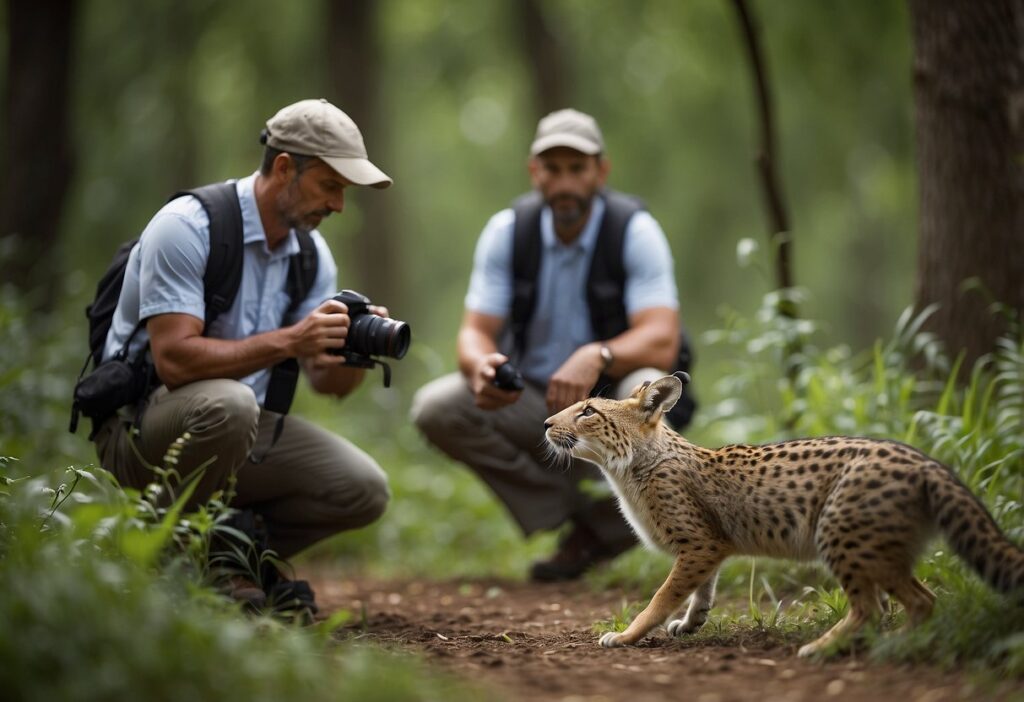
The prevalence of common wildlife photography etiquette mistakes is rooted in the “telephoto fallacy,” the assumption that distance equates to non-interference. Many photographers operate with a fundamental misunderstanding of animal flight initiation distances (FID). They believe that if an animal remains stationary, it is “calm” or “acclimated,” when in reality, the animal may be experiencing a “freeze” stress response. Identifying these common wildlife photography etiquette mistakes requires an honest assessment of one’s presence. Does the animal’s behavior change even imperceptibly when you arrive? If the answer is yes, you are already exerting influence that may compromise the subject’s biological objectives.
Oversimplification remains the greatest risk to meaningful progress in field ethics. The industry often promotes binary solutions: keep your distance or use a longer lens. However, these suggestions fail to account for site-specific variability. An animal in an urban corridor has a different stress threshold than one in a protected wilderness core. Recognizing common wildlife photography etiquette mistakes requires a shift toward an iterative, observational model. One must become a student of the landscape first and a photographer second. When we fail to do this, we inadvertently prioritize the aesthetic composition of a single image over the structural integrity of the environment we inhabit.
Deep Contextual Background
Wildlife photography emerged from the tradition of biological illustration and hunting, both of which historically emphasized the conquest or capture of the subject. The early 20th-century pioneers were often explorers who carried the colonialist mindset into the wilderness, viewing the animal as a trophy to be cataloged. While technology moved from bulky glass plates to high-speed digital sensors, the core impulse, the desire to seize and possess a moment of wildness,s remains largely unchanged.
The systemic shift occurred with the advent of the digital internet age. The pressure to generate consistent, “shareable” content turned wildlife photography into a competitive volume game. This has led to the “photographer-led” modification of environments: the use of baiting, playback calls to lure subjects, and the crowding of rare sightings. This history is essential to understand because it contextualizes why contemporary field ethics must be intentionally defensive. We are operating in an ecosystem that rewards the transgression of boundaries. Consequently, the burden of restraint rests entirely with the individual behind the lens.
Conceptual Frameworks and Mental Models
To evaluate field behavior with the required rigor, consider these frameworks:
-
The Behavioral-Displacement Threshold: This model suggests that every species possesses a unique boundary beyond which human presence causes an immediate biological cost. The goal is to remain in the “low-impact zone” where natural, non-defensive behavior continues.
-
The Resource-Allocation Model: This assesses the impact of your presence on the animal’s ability to acquire calories, rest, or mate. If your photography forces an animal to expend energy on vigilance or evasion, you are directly reducing its fitness.
-
The Information-Asymmetry Model: This addresses the reality that the photographer knows they are there for an image, but the animal may interpret the photographer as a predator. The photographer must bridge this gap by minimizing their “predatory signature” visual, auditory, and olfactory.
-
The “Cumulative Impact” Framework: This considers the collective stress of consecutive photographers at a single site. One photographer might cause minimal harm, but ten photographers in a day can cause total site abandonment.
Key Categories and Operational Variations
We can categorize ethical failures based on the nature of the interference, as outlined in the following table.
| Category | Typical Manifestation | Systemic Impact |
| Active Luring | Baiting/Call playback | Behavioral Distortion/Dependency |
| Proximate Intrusion | Breaking FID/Crowding | Chronic stress/Site abandonment |
| Habitat Alteration | Clearing vegetation for a “clean” frame | Ecosystem fragmentation |
| Biological Disturbance | Disrupting nesting/mating | Reproductive failure |
True leadership in the field involves a hierarchical approach to these risks. The priority must be the mitigation of active luring, followed by the strict observance of site-specific distance requirements, and finally, a commitment to “leave no trace” habitat management.
Real-World Scenarios and Decision Logic
Consider the “Nesting Predator” scenario. You find a rare bird species tending to its nest. The decision point is whether to continue shooting or to vacate the area. The failure mode is the belief that “the bird hasn’t flown away yet, so it is fine.” The logic of ethical stewardship mandates immediate withdrawal; the proximity of a human, even if perceived as a neutral observer, prevents the parent from attending to the nest, increasing the risk of predation or thermal stress on the chicks.
Another scenario involves “The Crowded Sighting.” You arrive at a site where twenty photographers are already surrounding a vulnerable animal. The decision logic dictates that you should not contribute to the “clustering effect.” The second-order effect of joining a crowd is the normalization of invasive behavior. By walking away, you prioritize the animal’s right to move freely, even if you lose the image.
Planning, Cost, and Resource Dynamics
The economic and temporal costs of ethical photography are often misunderstood as “barriers.”
-
The Time-Investment Cost: Ethical fieldwork requires waiting for the animal to reveal itself on its own terms. This often means hours or days of inactivity, a high cost in a productivity-focused culture.
-
The Gear-Versus-Skill Trade-off: High-quality images can be captured with extreme distance if the photographer possesses the field craft to predict behavior. Investing in learning animal tracking and habitat management is more effective than buying a longer lens to compensate for poor positioning.
-
The “Cost of Opportunity”: Accepting that certain images will never be captured is a necessary professional discipline. The willingness to miss a shot for the sake of the subject is the true hallmark of a mature photographer.
Tools, Strategies, and Support Systems
-
Species-Specific Behavioral Research: Consult peer-reviewed ethology journals before traveling to a site to understand the specific stress triggers for your target species.
-
Standardized Field Logs: Keep a record of not just your shots, but the animal’s behavior during your encounter, documenting any instances where you might have inadvertently caused distress.
-
Local Scout/Guide Collaboration: Hire guides who prioritize conservation over “results.” Their role is to keep you at a safe distance while ensuring you are in a location with high biological activity.
-
Camouflage and Hiding Infrastructure: Invest in high-quality, lightweight blinds that allow you to disappear into the landscape, minimizing your predatory signature.
-
Community-Reporting Networks: Engage with local conservation groups to understand which areas are currently under “stress-watch” due to nesting or migratory exhaustion.
Risk Landscape and Failure Modes
The primary systemic risk is “Normalization of Deviance,” where photographers witness others baiting or crowding animals and, seeing no immediate consequences, adopt the same behavior. This creates a cascade effect that erodes the ethical baseline of the entire community.
Another compounding risk is “Observer-Effect Blindness.” This is the psychological state where the photographer becomes so focused on the image on the LCD screen that they lose awareness of the surrounding environmental changes, the bird’s distress calls, the shift in the wind, or the encroaching behavior of other visitors. Identifying common wildlife photography etiquette mistakes requires an active, conscious effort to stay present in the physical world.
Governance, Maintenance, and Long-Term Adaptation
Professionalism in wildlife photography is a commitment to the maintenance of the environment.
-
Review Cycles: After every season, conduct an internal audit of your field practices. If you find you are constantly “forcing” encounters, your strategy needs an overhaul.
-
Adjustment Triggers: If you notice a decline in the visibility or health of a species in your local patch, take the initiative to stop photographing them entirely for a period.
-
Layered Checklist: Governance must be multi-tiered: personal field logs, periodic peer review with ethical practitioners, and a constant, vigilant scan of the latest research on how human presence affects your focus species.
Measurement, Tracking, and Evaluation
Evaluation must move beyond “number of keepers” to focus on outcomes.
-
Leading Indicators: The frequency with which you successfully predict and stay outside an animal’s flight path; the amount of time spent “quiet observation” versus “shutter time.”
-
Lagging Indicators: Evidence of species productivity at your documented sites; the absence of “stress signals” in the individuals you track over multiple seasons.
-
Documentation Examples: Field journals detailing behavioral observations rather than just gear settings; shared reports with land managers about species health at specific sites.
Common Misconceptions and Oversimplifications
-
Myth: “If the animal is in a public park, I can approach it as I like.”
Correction: Public access does not negate the animal’s need for space or the photographer’s responsibility to act as a steward. -
Myth: “Baiting is fine because the animal benefits from the food.”
Correction: Baiting distorts natural foraging patterns and creates dangerous dependencies on humans. -
Myth: “A silent shutter makes my presence irrelevant.”
Correction: Your visual and olfactory presence remains; the animal may still be monitoring you even if it doesn’t hear the shutter. -
Myth: “The most famous ‘secret spots’ are the best for photography.”
Correction: These areas are frequently “over-exposed,” and the animals there may be hyper-vigilant or exhausted by constant human presence. -
Myth: “Ethics are secondary to the image quality.”
Correction: The quality of the image is permanently tainted by the unethical means of its acquisition. -
Myth: “The animal looked like it was posing.”
Correction: This is anthropomorphism; the animal was likely alert, defensive, or curious, all of which are responses to your intrusion.
Conclusion
Mastering field etiquette is not about limiting creativity; it is about expanding the depth of the encounter. By avoiding the common wildlife photography etiquette mistakes that plague the modern industry, a photographer can achieve a level of intimacy and natural behavior that is simply impossible to replicate through intrusion. True wildlife photography is the art of disappearing into the landscape, of becoming a silent witness to a life that continues, entirely independent of the lens. It demands a lifelong commitment to humility, observation, and the refusal to prioritize one’s output over the biological integrity of the subject. In this discipline, the most significant achievement is not the image itself, but the knowledge that you left the scene in the same state of balance in which you found it.